Steel Chainmail Armor: Its Role in Protecting Soldiers and Workers
When it comes to safety gear, we all want something that does its job without compromise. Take a moment and think about the last time you needed protectionmaybe it was a work-related task where you had to handle sharp tools or machinery. Or perhaps, you’re a collector or cosplayer looking to invest in a chainmail shirt for historical reenactments or a costume. Whatever your reason, choosing the right chainmail is no small decision. The last thing anyone wants is to end up with a product that looks impressive but doesn’t actually offer the protection it promises.
I’ve been there toostanding in a shop or browsing online, unsure of how to tell if a piece of chainmail is up to the job. Whether it’s for industrial use, cosplay, or historical purposes, quality is critical. After all, poor-quality chainmail could end up being a liability, not a protective asset. So, how do you make sure you’re getting the best bang for your buck, and more importantly, that the chainmail you buy will protect you as intended?
In this guide, I’ll walk you through everything you need to know about evaluating the quality of steel chainmail. You’ll learn how to identify key features like welded rings, the right type of stainless steel, and even how to check for solid craftsmanshipwhether you’re gearing up for a work environment or picking out a piece for a costume.
The Struggle to Find High-Quality Chainmail
For many people, chainmail is often associated with knights in shining armor, but in today’s world, it serves a practical purpose in many industries. Whether you’re a professional in need of cut-resistant chainmail for your job, a cosplayer seeking historical accuracy, or a collector hunting down that perfect piece for display, the challenges are the same.
One of the most common issues I hear from others is the confusion around distinguishing high-quality chainmail from low-grade products that look like the real deal but fail when it comes to durability and protection. It’s easy to get swept up by the shiny look of a piece, but when it comes to real-world use, there are several things you need to check to make sure that chainmail will actually stand up to its intended purpose.
Key Factors to Look For When Evaluating Steel Chainmail
Now, let’s break down how you can tell the difference between a sturdy, well-made chainmail piece and one that might not live up to expectations. There are a few key areas to pay attention to: the material, the welding, the wire thickness, and the weave pattern.
1. Material Type: 304 vs. 316 Stainless Steel
A big part of the quality comes down to the material used in making the chainmail. Steel is generally the go-to choice for durability, but not all steel is created equal.
-
304 Stainless Steel: This is the more common, cost-effective option for many uses. It’s highly resistant to rust, which makes it ideal for environments where humidity or moisture might be present, such as in food processing.
-
316 Stainless Steel: For industrial use or high-end cosplay, 316 is the better choice. It’s a more corrosion-resistant alloy, ideal for harsh conditions such as exposure to saltwater or extreme industrial environments. It’s also used for medical-grade equipment due to its resistance to corrosion and wear.
Tip: If your chainmail is for high-risk industrial work or you plan on wearing it in extreme conditions, you’ll want to make sure it’s made from 316 stainless steel. It’s the best investment for long-term use and reliability.
2. Welded Rings vs. Open Rings
You may have heard the term ‘welded rings’ thrown around, but what does it really mean for the durability of your chainmail?
-
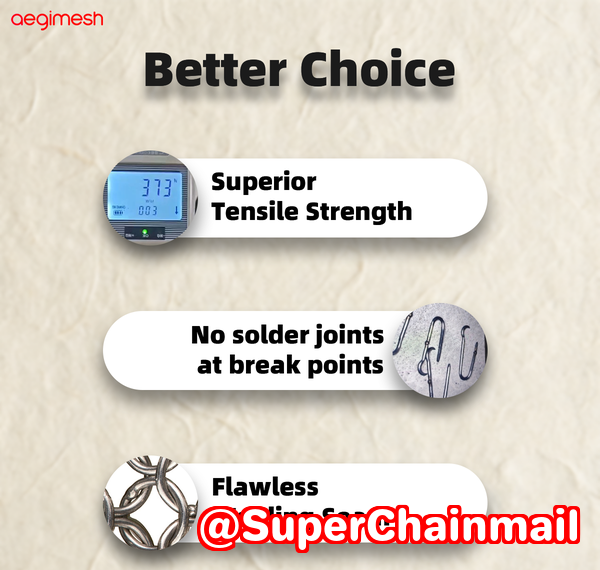
Welded Rings: These are rings that have been fused together at the seam, creating a stronger bond that holds the chainmail together more effectively. Welded rings prevent the rings from separating during heavy use or impact, making them the superior option for protective chainmail.
-
Open Rings: Open rings are simply bent into shape and can be more fragile than welded ones. Over time, open rings can weaken, especially if they’re subjected to continuous stress.
Tip: For a protective garment or for chainmail meant to handle rough environments, make sure the rings are welded. It’s a small detail that can make all the difference in longevity and safety.
3. Wire Thickness and Inner Diameter
It’s important to assess both the thickness of the wire used and the inner diameter of the rings. A good rule of thumb is that thicker wire will provide better protection, especially in industries that require cut-resistant chainmail (such as food processing or metalworking).
-
Wire Thickness: Thicker wire is more durable and offers more protection, but it can also make the chainmail heavier. Consider the balance between protection and comfort depending on your specific use.
-
Inner Diameter: The diameter of the rings should be consistent, as too large of a gap between rings can reduce the overall strength of the weave. In many cases, a diameter of around 8mm to 10mm is common for most practical uses, but it depends on your needs.
Tip: If you’re buying chainmail for industrial or protective use, pay close attention to both the wire thickness and inner diameter. The thicker the wire and the smaller the gap, the better the protection.
4. Weave Patterns: European 4-in-1 for Strength
The weave pattern is another key indicator of chainmail quality. Different patterns provide different levels of flexibility and strength. One of the most common and effective weave patterns is the European 4-in-1 weave, where each ring passes through four others.
-
This weave provides a balanced mix of flexibility and strength, making it a good choice for both protection and comfort. It’s also the most commonly used pattern in historical chainmail and armor.
-
Another popular pattern is the 6-in-1, which offers extra strength, but it can be less flexible and more difficult to work with.
Tip: If you’re looking for a piece that’s durable yet flexible, the European 4-in-1 weave is a safe bet. It strikes a great balance between protection and comfort.
How to Inspect Chainmail Quality
When you’re looking to buy chainmail, it’s important to know how to perform a few quick checks to ensure it meets the standards you need. Here’s how to do that:
Step-by-Step Inspection Tips:
-
Perform a Pull Test: Lightly tug on a few rings to see how easily they separate. If the rings stay intact and don’t budge, that’s a good sign.
-
Check for Corrosion: Look closely at the rings, especially if the chainmail has been exposed to water or moisture. Any sign of rust is an immediate red flag.
-
Inspect the Weave: Examine the weave pattern and check for consistency. Gaps or irregularities could indicate poor craftsmanship.
-
Examine the Rings: Run your fingers around the rings. If any feel sharp, uneven, or if you can see the weld seam separating, it’s a sign the chainmail wasn’t made with care.
Why Chainmail Quality Matters
When you purchase high-quality chainmail, you ensure that it’s not just a decorative item, but a true piece of protective gear. A durable, well-crafted chainmail shirt can protect you from sharp objects, cutting tools, and even blunt trauma in some cases. The same goes for industrial applications, where chainmail can be a lifesaver when it comes to avoiding cuts from knives or heavy equipment.
On the other hand, buying a poor-quality piece could put you at risk, especially if it’s meant for industrial use or cosplay where durability is essential.
Conclusion: Your Guide to Quality Chainmail
In conclusion, it’s essential to do a thorough inspection before purchasing any chainmail. By considering the material, ring type, wire thickness, and weave pattern, you can make sure that your chainmail will stand up to the test of time and keep you safe in any environment.
If you’re in the market for high-quality chainmail, I highly recommend following the steps above to ensure that your purchase meets safety and durability standards. By being diligent, you’ll avoid wasting money on low-quality products that could be unsafe or fall apart after minimal use.
Learn more about identifying high-quality chainmail products: Aegimesh Chainmail Inspection Guide
FAQ
-
How can I tell if a chainmail ring is welded or open?
-
Welded rings will have a smooth seam where the ends are fused together, whereas open rings will have a visible break at the join.
-
-
Which stainless steel grade is best for long-lasting chainmail?
-
316 stainless steel offers the best resistance to corrosion and wear, making it ideal for high-durability applications.
-
-
How do I inspect the weave pattern for strength?
-
Look for tight, uniform weaves like the European 4-in-1, ensuring that each ring is securely interwoven with others.
-
-
What are the signs of low-quality or unsafe chainmail?
-
Signs include loose rings, inconsistent weaving, rust, or rings that are easily pulled apart.
-
-
Can decorative chainmail be used for protective purposes?
-
Decorative chainmail may not provide the same level of protection as a properly made piece designed for safety. Always check the materials and construction.
-
-
How do I choose the right chainmail for industrial vs. cosplay use?
-
For industrial use, prioritize durability, weld strength, and resistance to corrosion. For cosplay, focus more on appearance and historical accuracy.
-