Plasma Welding Technology in Chainmail Apron Manufacturing
When purchasing chainmail for protection or display, I often struggle to know which products are genuinely high-quality. With so many options available, it’s easy to be misled by flashy designs or cheap pricing. But how can we be sure that the chainmail we’re investing in will stand up to the tests of durability and safety, especially for industrial or food-processing use? In this post, I’ll share my insights on how plasma welding technology plays a pivotal role in ensuring top-notch chainmail manufacturing, particularly for safety and long-term performance.
Evaluating Chainmail Quality: Why It Matters
Chainmail products, whether they’re used for historical reenactments, cosplay, industrial protection, or food safety, must meet certain standards to ensure their effectiveness. When we talk about chainmail quality, we’re referring to factors like the type of material, ring construction, weave pattern, and how those components come together to create a durable and reliable product.
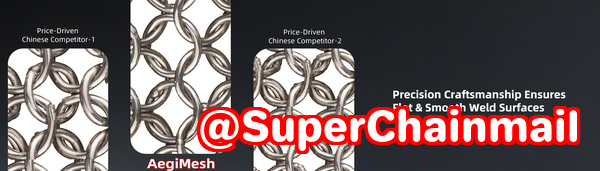
Here’s the problem: Low-quality chainmail may look like it offers protection, but it can be unsafe, uncomfortable, and ineffective over time. The truth is, the difference between high-quality and poor-quality chainmail often comes down to the technology and methods used in manufacturing, such as plasma welding.
The Rise of Plasma Welding Technology in Chainmail Manufacturing
Plasma welding is a modern technique that’s revolutionizing the way we make chainmail. This method involves using a plasma arc to fuse metal rings, resulting in stronger and more consistent welds. Unlike traditional methods like cold or mechanical welding, plasma welding offers better precision, higher durability, and more consistent results. It’s particularly important when manufacturing chainmail products used in demanding environments, such as food processing or industrial cut protection.
By utilizing this technology, manufacturers can ensure that the rings in the chainmail aprons or gloves are securely welded, minimizing the risk of separation or failure under pressure.
Common Pain Points When Evaluating Chainmail
When shopping for high-quality chainmail, it can be tricky to know what to look for. Here are a few common challenges I’ve encountered:
1. Differentiating Between Welded and Open Rings
Welded rings are key to the durability of chainmail. However, they can be tricky to identify, especially when you’re not familiar with the product. Open rings, which are merely linked together without welding, are far more likely to break or pull apart, especially under stress.
Why does this matter? If you’re purchasing chainmail for protective purposes, such as industrial work or food handling, welded rings are absolutely essential for ensuring maximum durability and safety. Without them, the protective qualities of the chainmail will be compromised.
2. Understanding Stainless Steel Grades
The type of stainless steel used in chainmail directly impacts its strength, resistance to corrosion, and overall longevity. For instance, 304 stainless steel is commonly used in non-industrial applications, while 316 stainless steel is more corrosion-resistant, making it ideal for use in food processing environments or extreme conditions.
How do you know which is right for your needs? If you’re looking for a chainmail product that will endure frequent exposure to water, food juices, or harsh chemicals, 316 stainless steel is a better choice due to its higher corrosion resistance.
3. Weak or Inconsistent Weaves
A chainmail weave that’s loose, uneven, or improperly constructed can undermine the entire purpose of the product. European 4-in-1 weave, one of the most popular and effective patterns, ensures that each ring is locked securely into four neighboring rings, making the structure both flexible and strong.
When evaluating chainmail, you’ll want to inspect the weave closely. If the weave appears uneven or the rings seem loose, it’s best to pass on the product. Such poor craftsmanship often leads to breakdowns in protection.
How to Inspect and Verify Chainmail Quality
Now that we understand the challenges, how can we ensure we’re buying a product that’s up to par? Here’s a step-by-step guide to evaluating chainmail quality, whether you’re purchasing it for industrial use, cosplay, or even a historical replica.
1. Material Type: 304 vs. 316 Stainless Steel
Before anything else, check the material. As mentioned earlier, 316 stainless steel is ideal for environments with exposure to moisture or corrosive substances. 304 stainless steel, on the other hand, is less resistant to rust, making it more suitable for indoor or dry conditions. The product description or tag should indicate which type of stainless steel is used. If it’s not clear, ask the seller or manufacturer for clarification.
2. Inspecting the Rings: Welding vs. Open Rings
To identify whether the rings are welded or open, look closely at the edges. A welded ring will have a noticeable joint where the ends meet, while an open ring will simply overlap. You can also try gently pulling on a single ring. If the ring easily separates or bends, it’s likely an open ring.
3. Ring Diameter and Wire Thickness
The wire thickness and the diameter of the rings play a huge role in the overall durability and flexibility of the chainmail. For safety or industrial use, look for chainmail where the wire is thick enough to resist cutting but not so thick that it reduces flexibility. The diameter of the rings should be large enough to allow the rings to interlock tightly without being too loose.
4. Evaluating the Weave Pattern
A tight, uniform weave is essential for ensuring that your chainmail holds up under pressure. If you’re inspecting a product like an apron or glove, the European 4-in-1 weave should be your go-to for strength. This weave pattern ensures that the rings are interlocked securely, providing the necessary protection against cuts and abrasions.
Why Proper Inspection Matters
Proper inspection before making a purchase is critical for several reasons:
-
Safety First: Chainmail used for industrial or food-processing applications must be able to withstand constant use without breaking or becoming ineffective. Poor-quality chainmail could put workers at risk or contaminate food.
-
Durability: Quality chainmail products are designed to last. By identifying low-quality chainmail upfront, you save money in the long run by avoiding replacements.
-
Avoiding Fake or Decorative Products: Not all chainmail is created equal. Decorative or cosplay chainmail may look great, but it often lacks the strength necessary for real-world applications.
My Final Thoughts on Choosing High-Quality Chainmail
After years of looking for the perfect chainmail products, I highly recommend taking the time to inspect each purchase carefully. Whether you’re in need of industrial cut protection, cosplay gear, or historical replicas, following the inspection steps I’ve outlined ensures that you’re getting the most value for your money.
To sum it up, always check the material type, welding quality, ring diameter, and weave pattern. These factors will help you identify high-quality, durable chainmail and avoid costly or unsafe mistakes.
Ready to find your next high-quality chainmail product?
Learn more about identifying high-quality chainmail products. We’ve created a detailed inspection guide to help you make informed decisions every time.
FAQs
1. How can I tell if a chainmail ring is welded or open?
Look closely at the ring’s edges. A welded ring will have a clear joint where the two ends meet, while an open ring will just overlap. Pulling gently on a ring can also help identify welded vs. open rings.
2. Which stainless steel grade is best for long-lasting chainmail?
For most industrial and food-processing applications, 316 stainless steel is the best choice due to its superior corrosion resistance. For general use, 304 stainless steel is sufficient.
3. How do I inspect the weave pattern for strength?
Check the weave closely. A European 4-in-1 weave is known for its strength and durability. Ensure that the rings are tightly interlocked without any loose or uneven spots.
4. What are the signs of low-quality or unsafe chainmail?
Look for loose or open rings, inconsistent weave patterns, thin wire, and signs of corrosion. These could indicate poor craftsmanship or unsuitable material.
5. Can decorative chainmail be used for protective purposes?
While decorative chainmail may look appealing, it’s typically not strong enough for industrial or protective use. Always choose welded rings and high-quality materials if protection is the goal.
6. How do I choose the right chainmail for industrial vs. cosplay use?
For industrial applications, focus on durability and safety. Opt for 316 stainless steel, welded rings, and a solid weave like European 4-in-1. For cosplay, aesthetics may be the priority, though durability should still be considered.
Tags: chainmail quality, welded rings, stainless steel chainmail, cut-resistant chainmail, chainmail inspection, European 4-in-1 weave, chainmail durability