Plasma-Welded Chainmail Aprons for Heavy-Duty Protection
When you’re looking for reliable chainmail, whether for industrial protection, cosplay, or historical reenactments, it can be tough to know which products really deliver on safety and durability. With so many options on the market, how do you tell the difference between high-quality, functional chainmail and flimsy imitations that may look good but fail in performance? As someone who’s been involved in both industrial use and collecting chainmail for years, I’ve faced the same frustrations. So let me walk you through the key steps to identifying high-quality chainmail that not only looks impressive but also provides the protection and durability you need.
Why Quality Matters in Chainmail
Chainmail, particularly when used in industries like butchery or food processing, serves a critical purpose: safety. You need chainmail that is strong enough to resist cuts and abrasions but flexible enough to provide comfort and ease of movement. Low-quality chainmail, on the other hand, may have weak rings or improper welds that can quickly fail in high-stress environments.
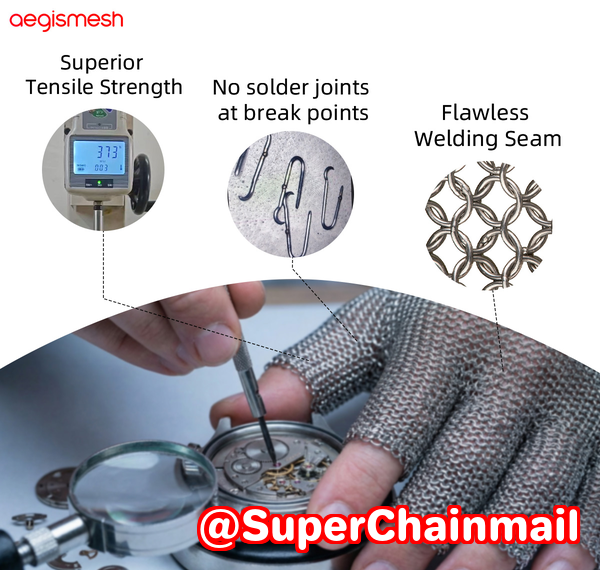
Take the example of a butcher who relies on chainmail aprons for protection while working with sharp knives. A poorly made apron could expose the wearer to serious injuries. For this reason, it’s essential to be able to distinguish between products that are just decorative or cosplay pieces and those that are made to withstand real-world use.
Common Pain Points When Buying Chainmail
One of the biggest challenges buyers face is differentiating between high-quality chainmail and low-quality or unsafe products. Here are some of the most common issues I see people struggle with:
-
Welded vs. Open Rings
It can be tough to tell whether the rings are welded (stronger) or open (weaker). Open rings are often found in cheaper chainmail, and they simply don’t offer the same durability and protection as welded rings.
-
Material Concerns
Not all stainless steel is created equal. If you’re unfamiliar with different grades, you might end up with a product that’s more prone to rust or corrosion. Stainless steel grades 304 and 316 are the most common, with 316 being more corrosion-resistant, especially in harsher environments like food processing or marine work.
-
Weave Quality
The weave pattern, particularly the European 4-in-1 weave, plays a significant role in the strength and flexibility of chainmail. Poorly woven chainmail can be brittle and susceptible to breaking under pressure.
These are just a few examples, but the key is knowing how to inspect chainmail for these features so you can avoid purchasing something that will let you down.
The Aegimesh Solution: How to Inspect Chainmail for Quality
When I first started looking into chainmail, I realized that it wasn’t enough to just take a product’s description at face value. You need to get hands-on and inspect the details to really understand what you’re buying.
Here’s a breakdown of the key features to evaluate when inspecting chainmail:
1. Material Quality: 304 vs. 316 Stainless Steel
The first thing I recommend checking is the material used. Stainless steel comes in different grades, and not all grades are created equal. For heavy-duty applications like industrial cut protection, I strongly recommend looking for 316 stainless steel. It offers better corrosion resistance, especially in environments where the chainmail will be exposed to moisture, acids, or salts.
Grade 304 stainless steel is a more common and less expensive option. It’s suitable for less demanding applications but may not hold up as well over time if exposed to harsh conditions.
2. Ring Welding: Look for Welded Rings
The next thing to check is whether the rings are welded or open. Welded rings are much stronger and more durable, offering better protection against cuts. Open rings, while easier and cheaper to make, simply don’t provide the same level of safety. To inspect this, simply run your finger along the inside of a few ringswelded rings will feel smoother, while open rings will feel rough and more prone to damage.
3. Wire Thickness and Inner Diameter
The wire thickness plays a big role in the overall strength of the chainmail. Thicker wire generally means a more durable product, but it also affects the flexibility. If you’re looking for chainmail for industrial work or heavy-duty use, go for a thicker wire. If you’re after a decorative or cosplay piece, a thinner wire may suffice.
The inner diameter (ID) of the rings is another important factor. If the rings are too large, the chainmail could be too loose and weak. If they’re too small, the flexibility could be reduced. A well-made chainmail piece strikes the right balance between flexibility and durability.
4. Weave Patterns: The European 4-in-1 Weave
One of the most well-known weave patterns in chainmail is the European 4-in-1 weave. This pattern, where four rings pass through one, creates a tight, flexible, and durable structure. When inspecting chainmail, you should check that the weave is even and consistent. If you notice any areas where the rings are uneven or the weave looks sloppy, that’s a sign of poor craftsmanship and should be avoided.
5. The Pull Test
A simple yet effective way to check the strength of the chainmail is by performing a pull test. Hold a small section of the chainmail and gently pull apart the rings. If the rings stay intact and the weave doesn’t separate, you’re looking at a quality product. If the rings come apart easily or the weave starts to unravel, you should walk away.
6. Inspect for Corrosion
Even stainless steel can corrode over time if exposed to harsh conditions. Look for signs of rust or corrosion on the chainmail. Pay close attention to the seams and rings, as these are the most likely places for corrosion to start. If you spot any rust, it’s a clear indicator of low-quality materials or poor craftsmanship.
Practical Guidance: Finding the Right Chainmail for Your Needs
Different applications require different types of chainmail. Here’s a quick guide to help you choose the right one for your needs:
-
Industrial and Cut Protection: If you’re looking for chainmail to protect against cuts in industries like food processing, butchery, or construction, opt for thicker, welded rings made from 316 stainless steel. The European 4-in-1 weave will offer the strength you need.
-
Cosplay and Historical Replicas: If you’re looking for chainmail for decorative purposes, you can get away with a lighter weight product. However, make sure the rings are still welded, and the weave pattern is correct. A well-made historical replica can be a great conversation starter at conventions.
-
Collectibles and Display: For chainmail that’s purely for display, aesthetics are the primary concern. However, it’s still important that the rings are welded and the weave is solid. This ensures that your collectible will stand the test of time.
Why You Should Invest in High-Quality Chainmail
Investing in high-quality chainmail isn’t just about getting a product that looks good. It’s about ensuring that the chainmail will do its job when you need it most. Whether you’re using it for industrial purposes, as part of a cosplay outfit, or simply as a historical replica, high-quality chainmail provides:
-
Safety: You can trust that it will offer the protection you need.
-
Durability: Well-made chainmail will last for years without deteriorating or breaking.
-
Value for Money: By investing in a quality product, you avoid having to replace it frequently.
I highly recommend following these steps when inspecting chainmail. Not only will this ensure you get a product that meets safety and durability standards, but it will also save you money in the long run.
To learn more about identifying high-quality chainmail products, visit our detailed chainmail inspection guide today at Aegimesh Chainmail.
FAQs
-
How can I tell if a chainmail ring is welded or open?
Welded rings feel smooth to the touch, while open rings will feel rough and may separate under stress.
-
Which stainless steel grade is best for long-lasting chainmail?
Grade 316 stainless steel is the most durable and corrosion-resistant, ideal for industrial or harsh environments.
-
How do I inspect the weave pattern for strength?
Look for a consistent and tight weave, like the European 4-in-1 pattern. The rings should interlock neatly without gaps.
-
What are the signs of low-quality or unsafe chainmail?
Poor craftsmanship, uneven rings, weak welds, and signs of corrosion are all red flags.
-
Can decorative chainmail be used for protective purposes?
While decorative chainmail may look good, it often lacks the strength and durability needed for protection. Always check the quality of the welds and material.
-
How do I choose the right chainmail for industrial vs. cosplay use?
For industrial use, choose thicker, welded rings made from 316 stainless steel. For cosplay, lighter, decorative chainmail will work fine, but ensure the weave and welds are solid.
-
What’s the best way to maintain chainmail to ensure it lasts?
Keep it clean and dry, store it properly, and regularly inspect for signs of rust or damage to maintain its durability.
Tags or Keywords
-
chainmail quality
-
welded rings
-
stainless steel chainmail
-
cut-resistant chainmail
-
chainmail inspection
-
European 4-in-1 weave
-
chainmail durability