How to Choose the Best Stainless Steel Chainmail for Safety
When you’re in the market for stainless steel chainmailwhether it’s for industrial use, cosplay, or as part of a historical collectionit can feel overwhelming. How do you know if the chainmail you’re looking at is high-quality and will actually do its job, whether that’s protecting your hands from sharp knives or serving as an impressive costume piece?
I’ve been in your shoes, wondering whether that seemingly affordable chainmail set is truly safe, durable, and worth the investment. Today, I want to share my insights into how you can evaluate chainmail quality so you never have to second-guess your purchase again. Let’s break it down together.
The Struggle: Identifying Quality Chainmail
When buying chainmail, there’s a lot at stake. If you’re in a profession like food processing or industrial work, your chainmail needs to be cut-resistant and tough. For cosplay, you want something that’s both durable and comfortable. And for collectors, authenticity and craftsmanship are key.
Unfortunately, not all chainmail is created equal, and identifying top-notch products can be tricky. Here are a few common issues that buyers face:
-
Welded rings vs. open rings: Many sellers will offer chainmail that looks great at first glance, but it’s crucial to check if the rings are welded or merely opened. Open rings are often weaker and not as durable, especially for safety gear.
-
Inconsistent weaves: Some chainmail uses poor-quality or inconsistent weaving, which can compromise its overall strength and durability.
-
Subpar materials: Stainless steel comes in different grades. Some are better for corrosion resistance, while others may rust or weaken over time, especially when exposed to harsh conditions.
But don’t worrythese problems are easily avoidable if you know what to look for. I’ve put together this guide to help you evaluate chainmail like a pro.
Chainmail Inspection: How to Spot the Best Quality
If you’re wondering how to make sure the chainmail you’re eyeing is the real deal, start by paying attention to these key factors:
1. Material: 304 vs. 316 Stainless Steel
The most common stainless steel grades used in chainmail are 304 and 316. While both are durable, there are some differences you’ll want to understand.
-
304 Stainless Steel: This is a general-purpose stainless steel. It’s highly resistant to rust and corrosion in most environments, making it great for general uses like cosplay or decorative pieces. However, it may not hold up as well in highly acidic or salty conditions.
-
316 Stainless Steel: This is a more specialized stainless steel with added molybdenum, which makes it more resistant to corrosion, especially in harsh environments. It’s often used for food handling or industrial work, where durability and corrosion resistance are critical.
For high-use or industrial settings, I highly recommend going with 316 stainless steelit’s worth the extra cost for the added protection.
2. Welded Rings vs. Open Rings
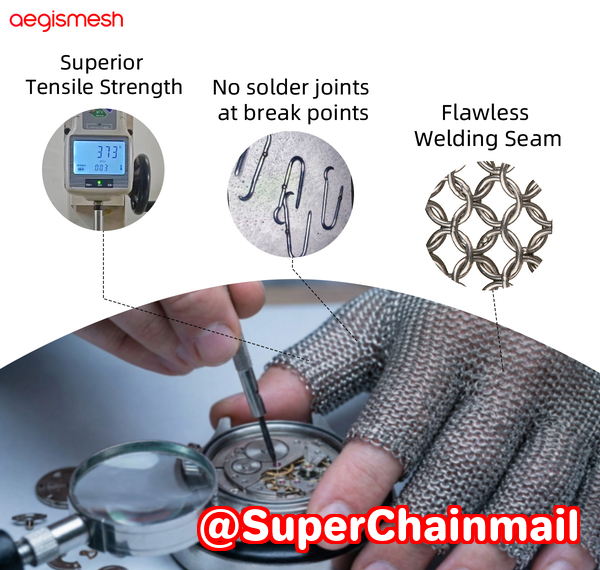
This is one of the most important factors when evaluating chainmail. Welded rings are essential for strength and durability. When you inspect the chainmail, look closely at each ring. If the rings are welded, they’ll look seamless, and the edges won’t be visible. Open rings, on the other hand, may have visible gaps or weak points where the wire hasn’t been properly closed.
Here’s a quick tip: Try gently pulling apart a few rings (without damaging the chainmail). If they’re welded, they won’t budge. Open rings will show gaps or come apart with minimal effort.
3. Wire Thickness and Ring Diameter
Another key factor in determining the strength and durability of chainmail is the thickness of the wire and the inner diameter of the rings. Thicker wire and smaller inner diameter rings are generally more durable.
When evaluating chainmail, consider these:
-
Wire thickness: Look for a wire thickness between 0.8mm and 1.2mm for good cut resistance. Anything thinner might not hold up under stress, especially in an industrial setting.
-
Ring diameter: A smaller inner diameter means more rings are packed together, making the weave denser and stronger. A common weave pattern like European 4-in-1 (where four rings surround one central ring) offers excellent strength and flexibility.
4. Weave Patterns for Strength
The weave pattern plays a significant role in the strength and flexibility of the chainmail. The most common and durable weave pattern is the European 4-in-1 weave, where four rings are connected around one central ring. This pattern provides excellent cut resistance and is one of the strongest available.
While other weaves like 6-in-1 or 8-in-1 can also offer strength, they’re often stiffer and less flexible, which may not be ideal for comfort or movement.
When inspecting chainmail, check for consistency in the pattern. If the rings are unevenly spaced or the weave looks sloppy, the product might be low-quality.
5. Signs of Corrosion or Poor Craftsmanship
Look for any rust spots or discoloration that might indicate low-quality material or poor craftsmanship. A good quality chainmail product, especially one made from stainless steel, should not rust easily. Corrosion can make the rings weak and compromise the overall safety of the chainmail.
Additionally, check the general finish of the rings. They should be smooth, free of burrs, and uniformly shaped. Any rough edges or poorly finished areas could signal poor manufacturing.
6. Pull Test for Durability
A quick pull test can give you insight into how well the chainmail is put together. Gently tug at a section of the chainmail. If the weave feels tight and sturdy, that’s a good sign. If it feels loose or if you can pull apart any rings, it’s likely low-quality and may not offer the protection you need.
Why It Matters: How Quality Chainmail Protects You
When you’re using chainmail for industrial work, food handling, or personal protection, you’re relying on its strength to keep you safe. Poor-quality chainmail might look fine at first glance, but it won’t hold up when it’s put to the test. And let’s face itno one wants to spend money on something that doesn’t do the job.
By inspecting the material, rings, weave, and craftsmanship, you can avoid unsafe purchases and save money by investing in durable, long-lasting chainmail that truly performs.
Conclusion: Choose Chainmail That Works for You
After looking at all the factors that affect chainmail quality, I highly recommend taking the time to inspect the product thoroughly before purchasing. Whether you’re using it for work, play, or as part of a collection, quality chainmail should meet both safety and aesthetic standards.
To recap:
-
Look for welded ringsthey’re stronger and more durable than open rings.
-
Choose 316 stainless steel for environments where corrosion resistance is crucial.
-
Inspect wire thickness and ring diameter to ensure strength and durability.
-
Evaluate the weave patternEuropean 4-in-1 is one of the strongest and most reliable.
-
Perform a simple pull test to check for durability.
By following these steps, you can feel confident in your purchase and avoid wasting money on low-quality products.
Want to dive deeper into chainmail quality? Check out our detailed chainmail inspection guide today.
Frequently Asked Questions
How can I tell if a chainmail ring is welded or open?
Welded rings will have smooth, seamless edges, while open rings may have visible gaps. Try gently pulling on the ringswelded rings won’t separate, but open rings will.
Which stainless steel grade is best for long-lasting chainmail?
For most applications, 316 stainless steel is the best choice because it’s more resistant to corrosion, especially in food handling or industrial environments.
How do I inspect the weave pattern for strength?
Look for consistent, even patterns. The European 4-in-1 weave is a great option for durability, as it offers excellent cut resistance and flexibility.
What are the signs of low-quality or unsafe chainmail?
Look for rust spots, inconsistent weaves, or poorly welded rings. Any signs of corrosion or weak craftsmanship should raise a red flag.
Can decorative chainmail be used for protective purposes?
Decorative chainmail is typically not built to withstand impacts or cuts. For safety purposes, always choose chainmail designed for protection, like industrial or food-grade options.
How do I choose the right chainmail for industrial vs cosplay use?
For industrial use, prioritize 316 stainless steel and a tight European 4-in-1 weave for maximum protection. For cosplay, comfort and aesthetics may be more important, so 304 stainless steel or lighter materials might suffice.
Tags
chainmail quality, welded rings, stainless steel chainmail, cut-resistant chainmail, chainmail inspection, European 4-in-1 weave