Chainmail Arm Guards in Meat and Fish Processing: A Guide to Identifying Quality Protection
When it comes to working with knives and sharp tools, particularly in industries like meat and fish processing, safety is a top priority. Whether you’re slicing through cuts of beef or filleting fish, protecting your hands and forearms is crucial to avoid serious injuries. Many professionals, hobbyists, and even collectors turn to chainmail as an ideal solution. But how can you ensure that the chainmail you’re purchasing is up to the task?
The problem is that not all chainmail is created equal. You might be tempted by the shiny, intricate designs of decorative pieces or tempted to save money on a seemingly great deal, only to find out later that your chainmail isn’t as strong or durable as it should be. This is a common concern for those new to chainmail or even seasoned buyers. The challenge is knowing how to evaluate the quality of the chainmail to make sure it provides the protection you need in high-risk environments like food processing or industrial work.
Luckily, it’s not as hard as you might think to identify high-quality chainmail. In this article, I’ll walk you through some practical steps for evaluating chainmail arm guardswhether for professional use in meat and fish processing, cosplay, or as part of your collection.
Common Pain Points in Evaluating Chainmail
When you’re on the hunt for chainmail, there are a few challenges that can trip you up. Here are some of the most common issues people run into:
-
Welded vs. Open Rings: One of the biggest challenges when shopping for chainmail is determining whether the rings are welded or open. While open rings can be cheaper and less durable, welded rings are a must for industrial and protective uses. Open rings tend to degrade more quickly and can lead to safety concerns.
-
Uncertainty about Stainless Steel Grades: Not all stainless steel is created equally, and there are specific grades that perform better in certain environments. For example, 304 stainless steel is commonly used in food processing, but if you’re looking for maximum corrosion resistance and durability, 316 stainless steel is often a better choice. The trouble is, it can be hard to know which grade you’re getting unless you’re familiar with the material properties.
-
Weak Weave Patterns: A seemingly perfect chainmail design can still fail if the weave pattern isn’t strong enough. While many people are familiar with the term “European 4-in-1,” not everyone knows what it means in practice or why it matters. A poorly executed weave pattern can compromise the overall strength and safety of the chainmail, making it less reliable when you need it the most.
Fortunately, there are ways to identify these issues and avoid purchasing subpar chainmail. One of the best solutions is to reference guides that show you how to properly inspect and verify chainmail quality. Let’s explore some practical guidance for evaluating the quality of your chainmail purchase.
How to Inspect Chainmail for Quality
Aegimesh Chainmail provides a fantastic resource for evaluating the quality of chainmail. By following a few simple steps, you can ensure that your purchase meets the necessary standards for both safety and durability. Below are the key inspection methods that will help you spot low-quality products and identify chainmail that’s built to last.
1. Material Type: Choosing Stainless Steel Grades
The material of your chainmail is crucial, particularly when it comes to industrial use. In meat and fish processing, you need chainmail that can withstand constant contact with water, sharp tools, and harsh conditions. Two of the most common types of stainless steel used in chainmail are 304 and 316.
-
304 Stainless Steel: This is the most commonly used stainless steel for food processing, offering solid durability and resistance to corrosion in normal conditions.
-
316 Stainless Steel: While more expensive, 316 stainless steel offers superior corrosion resistance, making it ideal for environments exposed to harsh chemicals or saltwater. If you’re working with fish processing or anywhere that chainmail may be exposed to seawater or other corrosive substances, 316 is the better choice.
2. Welding the Rings: How to Tell the Difference
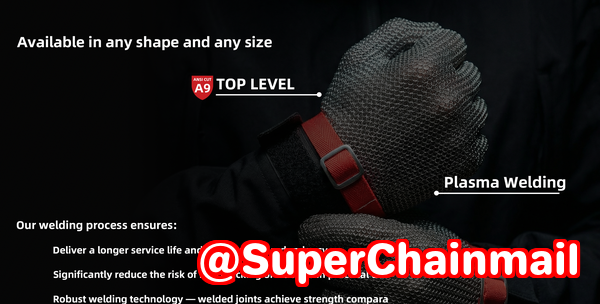
Welded rings are a hallmark of quality chainmail, especially for protection in industrial and food-processing environments. Open rings, while visually appealing, don’t offer the same level of durability and safety. Here’s how you can tell whether the rings are welded or open:
-
Inspect the edges of the rings. Welded rings will have a smooth, continuous seam along the edge where the two ends meet. Open rings, on the other hand, will have visible gaps where the ends don’t align perfectly.
-
Pull test: If you’re unsure, you can gently pull apart the rings (by hand or with pliers). Open rings should easily pull apart, while welded rings will stay intact.
3. Wire Thickness and Ring Diameter
The thickness of the wire and the diameter of the rings are critical factors in the durability of chainmail. To evaluate these features, consider the following:
-
Wire Thickness: For industrial applications, thicker wire is better. Thin wires may not provide enough strength to withstand heavy usage or high-risk tasks. Look for wire with a diameter of at least 1.5mm or higher for professional use.
-
Ring Diameter: The inner diameter of the rings also plays a significant role in the strength of the weave. A ring that’s too large or too small can cause the chainmail to lose its structural integrity. The ideal inner diameter should be proportionate to the wire thicknessif you’re unsure, a good rule of thumb is that the diameter should be roughly 4-5 times the wire thickness.
4. Weave Patterns: Understanding the Importance of European 4-in-1
The weave pattern of the chainmail is another area where quality can make or break your purchase. A common weave pattern you’ll come across is European 4-in-1, which means each ring interlocks with four other rings in a square formation. This particular weave provides a high level of strength and flexibility.
When evaluating chainmail, inspect the following:
-
Consistency: Make sure that the rings are all uniformly sized and interlock properly in the pattern. Inconsistent weaves or gaps in the weave can reduce the overall effectiveness of the chainmail.
-
Strength of the Pattern: Test the flexibility of the weave by gently pulling on the fabric. A high-quality chainmail should bend and flex without losing its integrity. If the weave feels fragile or loose, the chainmail may not be strong enough to protect you.
5. Visual and Structural Inspection
Lastly, always perform a thorough visual inspection of the entire piece of chainmail. Check for any signs of damage, poor craftsmanship, or weak spots. Common issues to watch for include:
-
Corrosion: Look for signs of rust or tarnishing, especially around the rings. This could indicate poor-quality stainless steel or an improper welding job.
-
Loose Rings: Even with welded rings, poorly assembled chainmail can have rings that aren’t properly closed, which will weaken the structure.
Why These Steps Matter: Real-World Benefits
By following the above steps, you can avoid purchasing low-quality chainmail that may not offer the protection you need. Whether you’re using the chainmail in an industrial environment, for cosplay, or as part of a collection, quality matters.
-
Safety First: Low-quality chainmail, especially in industries like meat and fish processing, can compromise your safety. By ensuring that you’re purchasing welded rings and high-grade stainless steel, you can protect yourself from injury.
-
Long-Lasting Durability: Proper chainmail inspection ensures that your purchase will withstand long-term use. The higher the quality, the longer the chainmail will lastsaving you money in the long run.
-
Cost-Effective Decisions: Understanding how to evaluate chainmail will prevent you from wasting money on low-quality or decorative pieces that can’t provide the durability you need for industrial or protective use.
Conclusion: Your Chainmail Inspection Checklist
When purchasing chainmail for meat and fish processing or any other industrial use, it’s essential to follow the steps outlined in this guide to ensure your purchase meets safety and durability standards. I highly recommend checking the material, welds, wire thickness, ring diameter, and weave pattern before making your final decision.
To make informed choices and avoid the risk of unsafe purchases, be sure to refer to trusted resources like Aegimesh Chainmail. Learn more about identifying high-quality chainmail products here.
FAQ
How can I tell if a chainmail ring is welded or open?
Welded rings will have a smooth, continuous seam, while open rings will have visible gaps.
Which stainless steel grade is best for long-lasting chainmail?
316 stainless steel is the best for corrosion resistance, while 304 is a solid choice for general use in food processing.
How do I inspect the weave pattern for strength?
Look for consistent European 4-in-1 patterns and check that the rings interlock properly without gaps.
What are the signs of low-quality or unsafe chainmail?
Look for rust, loose rings, inconsistent weaves, or poorly welded rings.
Can decorative chainmail be used for protective purposes?
Decorative chainmail might look good but may not provide the necessary protection for industrial or safety purposes.
How do I choose the right chainmail for industrial vs. cosplay use?
For industrial use, choose welded rings, thicker wire, and high-grade stainless steel. For cosplay, lighter, decorative pieces can suffice.