Chainmail Arm Guards for Slaughterhouse Applications
When you’re working in a slaughterhouse, safety isn’t just a recommendationit’s a necessity. Whether you’re slicing through meat, handling sharp tools, or maneuvering around high-risk environments, the right protection is vital. Chainmail arm guards have long been a popular choice in these settings, offering cut-resistant armor that helps prevent injuries from sharp objects. But with the abundance of chainmail products on the market, how do you ensure you’re purchasing the best quality for both protection and durability? If you’ve ever been uncertain about distinguishing between high-quality and low-quality chainmail, you’re not alone. Let me walk you through how to identify top-notch arm guards that can stand up to the rigorous demands of a slaughterhouse.
Understanding Chainmail Quality: The Key to Safe Protection
In industries where sharp tools and risks of injury are part of the daily routine, like slaughterhouses, the quality of your protective gear can make all the difference. But how do you know if you’re buying the real deal or just an imitation that won’t hold up under pressure?
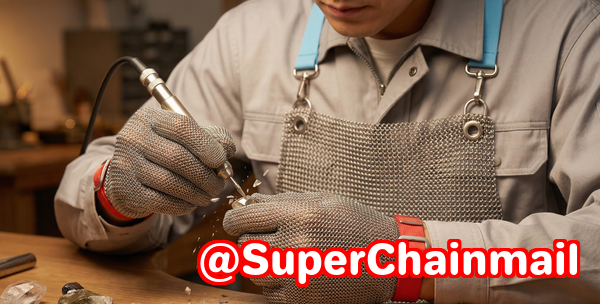
For example, take a moment to think about this: You’ve just received a pair of chainmail arm guards. They look shiny and seem sturdy, but after a few uses, you notice the rings begin to warp, or worse, the gloves start to fall apart. In industries like butchery, this could be dangerousimagine a scenario where you’re handling a sharp cleaver, and your gloves suddenly start to fail. It’s a situation no one wants to face.
Here’s where understanding what makes up high-quality chainmail becomes crucial. Chainmail isn’t all created equal. You can find products made with varying materials, different ring types, and a variety of weave patterns. That’s why knowing what to look for before you make a purchase is key.
Common Pain Points: How to Avoid Making a Poor Purchase
Many buyers are often in the dark when it comes to evaluating chainmail quality. Let’s explore a few pain points people often face:
-
Welded Rings vs. Open Rings
One of the most common mistakes when purchasing chainmail is confusing welded rings with open rings. Open rings are not as durable and can break more easily, especially under stress. Welded rings, on the other hand, are more secure and prevent unraveling. This is essential in a slaughterhouse setting, where durability is key.
-
Stainless Steel Grades
You might come across various stainless steel options when browsing chainmail products304 stainless steel and 316 stainless steel are the most common. While 304 steel is more affordable and suitable for lighter use, 316 steel is far superior for industrial settings because it offers better corrosion resistance. In a slaughterhouse environment where exposure to water and blood is frequent, the last thing you want is rust or corrosion on your protective gear.
-
Inconsistent Weaves
Not all chainmail weaves are created equal. Some weaves are much stronger than others. For instance, the European 4-in-1 weave, where each ring is connected to four others, is widely regarded as one of the most robust patterns. A weak or poorly woven pattern could compromise the arm guard’s ability to protect against cuts or abrasions.
How to Inspect Your Chainmail Arm Guards for Quality
Now, let’s talk about how you can inspect your chainmail before you even put it to use. By following these steps, you’ll feel more confident in your purchase, knowing you’ve selected a high-quality, reliable product.
-
Check the Material: 304 vs. 316 Stainless Steel
Stainless steel is the backbone of high-quality chainmail, but not all steel is created equally. 304 stainless steel is cheaper and rusts more quickly when exposed to harsh environments. 316 stainless steel is better at resisting corrosion, making it ideal for wet environments like slaughterhouses. Always verify the steel grade when purchasing chainmail for industrial use.
-
Examine the Welded Rings
The strength of a chainmail product depends largely on the integrity of the rings. Welded rings are far superior to open rings in terms of durability and safety. If you’re looking at a chainmail product, you should be able to feel the firmness of the rings, ensuring they’re not loose or easily bent. You can also inspect for any visible signs of weak welds, like small gaps in the rings.
-
Inspect the Wire Thickness
A thicker wire generally means a stronger chainmail product. When inspecting arm guards, look for a wire gauge that is thick enough to resist cuts and abrasions from sharp tools. A thinner wire may bend or break more easily under pressure, compromising the protective layer.
-
Check the Ring Diameter and Weave Pattern
The diameter of the rings affects how tightly the chainmail fits together. A smaller diameter typically provides stronger protection, as the rings are packed more tightly. The weave pattern is also crucial for overall durability. The European 4-in-1 weave, for example, is one of the strongest and most secure patterns, making it perfect for high-risk environments like slaughterhouses.
-
Perform a Pull Test
A simple test to check the strength of the chainmail is the pull test. Gently pull at the rings or weave of the arm guards to see if anything loosens or shifts. If the rings are tightly welded and the weave is secure, you should feel confident that the product is well-constructed.
-
Look for Signs of Corrosion
Since slaughterhouses involve exposure to moisture and blood, corrosion is a major concern. Look for any early signs of rust or discolouration on the steel rings, as this is a red flag that the chainmail won’t stand up to prolonged exposure to these harsh elements.
-
Fit and Comfort
While protection is the primary function, comfort should not be overlooked. A high-quality arm guard should fit snugly but comfortably, allowing you to move freely without feeling restricted. Poorly fitting or uncomfortable chainmail can not only be distracting but may also reduce its effectiveness in the long run.
Conclusion: The Importance of High-Quality Chainmail Arm Guards
When purchasing chainmail for slaughterhouse applications or any industrial use, it’s essential to ensure that you’re investing in a product that will offer protection, durability, and reliability. By checking material grades, inspecting the rings, and evaluating the weave patterns, you can make an informed decision that will protect you in high-risk environments. I highly recommend following these steps to ensure any chainmail purchase meets safety and durability standards.
If you’re looking for more information on how to evaluate chainmail, check out our detailed inspection guide. This will give you all the tools you need to identify quality products and avoid low-quality or unsafe purchases.
FAQs
1. How can I tell if a chainmail ring is welded or open?
You can tell if a ring is welded by looking for signs of welding on the joint, or by gently pulling at the rings to see if they separate. Welded rings will hold together securely, while open rings will shift and potentially come apart.
2. Which stainless steel grade is best for long-lasting chainmail?
For industrial applications, 316 stainless steel is the best choice due to its superior corrosion resistance, especially in wet or harsh environments like slaughterhouses.
3. How do I inspect the weave pattern for strength?
Look for the European 4-in-1 weave, where each ring is connected to four others. This pattern is known for its strength and durability, ideal for environments with high risk of injury.
4. What are the signs of low-quality or unsafe chainmail?
Signs of poor-quality chainmail include loose rings, visible rust or corrosion, thin wire, or inconsistent weaving. These all compromise the effectiveness of the protection.
5. Can decorative chainmail be used for protective purposes?
While decorative chainmail may look similar to protective versions, it often lacks the durability and strength needed for industrial applications. Always verify the materials and weave before using chainmail for protection.
6. How do I choose the right chainmail for industrial vs. cosplay use?
For industrial use, focus on chainmail made from high-quality materials like 316 stainless steel, with welded rings and strong weaves. For cosplay, aesthetic details and comfort may be more important than industrial-grade durability.
7. How do I perform a pull test on chainmail?
To perform a pull test, gently tug on the rings or weave to see if any parts loosen or shift. A high-quality product should hold firm and not show signs of structural failure.
Tags:
chainmail quality, welded rings, stainless steel chainmail, cut-resistant chainmail, chainmail inspection, European 4-in-1 weave, chainmail durability