Chainmail Aprons for Industrial Knife Work: A Guide to Identifying High-Quality Products
When you’re working with knives or other sharp objects in industrial environments, safety is paramount. Whether you’re handling meat in a butcher’s shop, slicing through thick materials in a factory, or even enjoying cosplay or historical re-enactments, ensuring you have the right protective gear can mean the difference between safety and injury. But here’s the thing: not all chainmail is created equal. While it’s easy to be drawn to a shiny piece of cut-resistant chainmail, how can you be sure it’ll hold up to the demanding tasks you need it for?
This is where I’ve come to realize that many buyerswhether they’re professional workers or collectorsstruggle. The challenge is clear: how do you sift through the low-quality, decorative imitations and spot the true, durable chainmail that can withstand industrial knife work? And how can you ensure you’re making an informed, safe purchase?
In this article, I’ll walk you through the process of evaluating chainmail quality so that you can make the right decision for your needs. I’ll cover everything from inspecting materials and ring construction to understanding weave patterns and how to avoid costly mistakes.
Let’s dive into the essential steps of finding high-quality chainmail that’ll not only protect you but also last through countless uses.
The Key Pain Points in Evaluating Chainmail
If you’re reading this, you’ve probably faced some of the common challenges buyers encounter when shopping for chainmail. Maybe you’ve felt uncertain about whether the apron you’re eyeing is actually as protective as it claims, or perhaps you’ve been burned by purchasing low-quality pieces that don’t live up to expectations. Let’s explore some of the most common pain points and how to avoid them.
1. Welded vs. Open Rings: Which One’s Better?
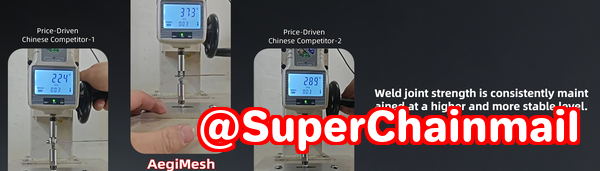
A chainmail product may look the part, but how can you tell if the rings are properly welded or if they’re simply open? Open rings are far weaker and more prone to breaking under pressure, while welded rings ensure a much stronger bond, adding durability and safety.
The catch? It’s not always obvious, especially when you’re dealing with decorative chainmail that might be marketed as high-quality. This is why inspecting the craftsmanship is so important.
2. Uncertainty About Stainless Steel Grades
One of the first things to look out for when inspecting chainmail is the grade of stainless steel. You’ve probably heard of 304 and 316 stainless steel, but how do you know which one is best for your needs? 304 stainless steel is more affordable but is more prone to corrosion, especially in environments where exposure to moisture and acidic substances is common. On the other hand, 316 stainless steel offers superior corrosion resistance, making it ideal for food-processing environments or any industrial setting where longevity is crucial.
3. Weak or Inconsistent Weaves
The weave pattern of chainmail, like European 4-in-1, plays a huge role in its durability and strength. If the weave is inconsistent or too loose, it won’t provide the protection needed for industrial knife work. Many low-quality products cut corners in the weaving process, which can make them much weaker and prone to failure.
How to Inspect and Verify Chainmail Quality
Now that we’ve covered the pain points, let’s explore how you can effectively inspect chainmail to ensure you’re getting a high-quality product. Follow these simple steps to make an informed decision:
1. Check the Material Type: 304 vs. 316 Stainless Steel
When evaluating chainmail, the first thing you want to check is the material used. If you’re buying chainmail for heavy-duty work, like industrial knife handling, 316 stainless steel is your best bet. Here’s why:
-
304 Stainless Steel: Good for decorative uses or light-duty tasks. It’s less expensive but not as resistant to corrosion.
-
316 Stainless Steel: Ideal for environments with high humidity, food processing, or other industrial applications. It’s corrosion-resistant, making it much more durable for prolonged use in tough environments.
2. Inspect the Ring Construction: Welded or Open?
A quick test you can perform is inspecting the rings of the chainmail. Press the rings between your fingers and see if they move easily. If the rings are welded, they should feel solid and immovable. If they’re open, you’ll likely be able to tell right away because they’ll have a noticeable gap where they haven’t been fully sealed.
Tip: A simple pull test can reveal weaknesses in the ring structure. Gently tug on the rings to see if they pull apart.
3. Evaluate the Wire Thickness and Inner Diameter
Another crucial inspection point is the wire thickness and inner diameter of the rings. Thicker wire generally means stronger chainmail. However, you also need to check the inner diameter of the rings. Too wide, and the chainmail becomes loose and ineffective; too narrow, and it can restrict movement, which can be uncomfortable.
Look for a balanceenough space for flexibility without compromising the protective function of the weave.
4. Inspect the Weave Pattern
The weave pattern affects how well the chainmail can absorb and deflect force. A pattern like the European 4-in-1 is popular because it provides excellent flexibility and strength. In this weave, each ring connects to four others, creating a sturdy, interlocking design that can withstand impact without compromising flexibility.
Check if the weave looks uniform and consistent. Any signs of loose or irregular rings should be a red flag.
Why Proper Inspection Matters
Ensuring the quality of your chainmail product is more than just a matter of saving money. It’s about safety and performance. Whether you’re using the chainmail in a professional environment or as part of a costume, you don’t want to risk choosing a low-quality product that could break at the wrong moment. Here’s how proper inspection can benefit you:
-
Safety: High-quality chainmail is essential for ensuring protection from cuts or injury, especially in industrial knife work or food processing.
-
Durability: Investing in durable, properly woven chainmail ensures that you won’t have to replace your protective gear constantly.
-
Cost Savings: By inspecting your chainmail before purchase, you’ll avoid spending money on subpar products that don’t meet your needs.
Practical Tips for Inspecting Chainmail
Now that we’ve covered the essentials, let’s wrap up with a few simple tips to help you inspect chainmail like a pro:
-
Perform a Pull Test: Gently tug on the rings to check if they are welded or open.
-
Look for Signs of Corrosion: Even if the chainmail looks shiny, check for any signs of rust or discoloration, particularly on the inner rings.
-
Check the Weight: High-quality chainmail will be slightly heavier due to the stronger rings and denser weave.
-
Choose Based on Use: Consider what you’ll be using the chainmail for (e.g., industrial, cosplay, food processing) and select accordingly.
Conclusion
In conclusion, I highly recommend following these steps to ensure any chainmail purchase meets safety and durability standards. By checking for the right materials, welds, and weaves, you can avoid the pitfalls of low-quality products and make an informed, confident purchase. Chainmail isn’t just about looks; it’s about functionality and protection, especially in industrial knife work and high-risk environments.
If you’re ready to dive deeper into chainmail inspection and ensure your next purchase is top-notch, be sure to check out our detailed chainmail inspection guide today.
Learn more about identifying high-quality chainmail products
Frequently Asked Questions
-
How can I tell if a chainmail ring is welded or open?
Press the rings between your fingers. Welded rings should feel solid, while open rings will have a noticeable gap.
-
Which stainless steel grade is best for long-lasting chainmail?
For industrial use, 316 stainless steel is ideal due to its superior corrosion resistance.
-
How do I inspect the weave pattern for strength?
Look for a uniform, tight European 4-in-1 pattern. Any loose or irregular rings indicate poor craftsmanship.
-
What are the signs of low-quality or unsafe chainmail?
Signs include weak welds, inconsistent weave patterns, thin wire, or visible corrosion.
-
Can decorative chainmail be used for protective purposes?
While decorative chainmail can look great, it may not offer the same level of protection as industrial-grade chainmail.
-
How do I choose the right chainmail for industrial vs cosplay use?
For industrial use, prioritize durability and safety by choosing 316 stainless steel and a tight weave. For cosplay, aesthetics and comfort are the main focus.
Keywords
-
chainmail quality
-
welded rings
-
stainless steel chainmail
-
cut-resistant chainmail
-
chainmail inspection
-
European 4-in-1 weave
-
chainmail durability