Workplace Safety Workshops Using Chainmail
Imagine walking into a food processing workshop, where workers handle sharp knives and slicers every day. One wrong move could lead to serious injuries. Now, picture the same environment equipped with properly inspected chainmail gloves and protective aprons, giving both the workers and supervisors peace of mind. For anyone who’s ever struggled to identify high-quality chainmail, this scenario hits home. When I first started exploring protective chainmail for workplace safety, I found it challenging to distinguish between products that were genuinely durable and those that were decorative but unsafe.
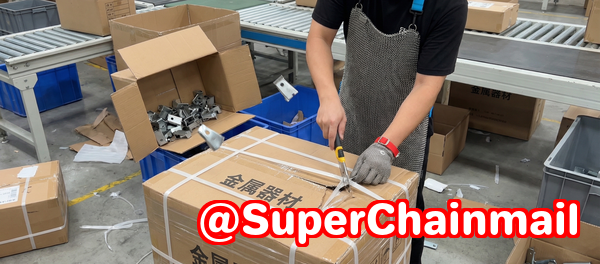
Chainmail isn’t just for knights or cosplayersit’s a vital tool in industrial safety, food handling, and even in historical recreations. But with so many options on the market, knowing which chainmail provides real protection requires a careful eye and a bit of know-how. That’s where a guide like Aegimesh Chainmail becomes invaluable. It helps you evaluate chainmail quality, inspect welded rings, and understand material grades, ensuring that you get durable, safe, and reliable products.
Common Challenges When Evaluating Chainmail
When I first dove into buying chainmail for workplace safety workshops, I quickly ran into a few recurring problems that many buyers face:
1. Distinguishing Welded Rings from Open Rings
At first glance, a chainmail weave might look solid, but the real question is whether each ring is welded shut or simply closed. Open rings can bend or break under stress, rendering your protective gear useless. I remember seeing a set of gloves advertised as ‘cut-resistant,’ only to find that under a simple pull test, several rings popped open. That’s the last thing you want when workers rely on chainmail for protection.
2. Understanding Stainless Steel Grades
Not all stainless steel is created equal. Chainmail made from 304 stainless steel can resist corrosion and rust in most environments, but 316 stainless steel is superior for harsher conditions, like marine or high-moisture workplaces. Many buyers overlook this detail and end up with chainmail that degrades faster than expected.
3. Inconsistent or Weak Weaves
Even high-quality rings won’t help if the weave is sloppy. Patterns like European 4-in-1 are standard for a reasonthey distribute force evenly and resist cutting or tearing. When I inspected some lower-cost chainmail, I noticed rings spaced too far apart, uneven tension, and twisted links, all of which compromise durability.
Inspecting Chainmail: Step-by-Step Guide
Thankfully, there are practical ways to assess chainmail before you commit to a purchase. Here’s what I’ve learned from handling Aegimesh Chainmail and other professional-grade products:
Check the Material Type
-
Look for specifications: 304 or 316 stainless steel.
-
Understand your use case: 304 is fine for general workshops, cosplay, and most industrial environments. For wet or corrosive conditions, 316 is best.
-
If unsure, a magnet test can helpstainless steel is usually non-magnetic, while lower-quality metals may attract magnets.
Inspect Ring Welding
-
Examine each ring under good lighting. Welded rings will have a seamless joint, whereas open rings may show a small gap or visible overlap.
-
Perform a gentle pull test on a few rings to ensure they hold. Welded rings should resist moderate pressure without bending.
Evaluate Wire Thickness and Ring Diameter
-
Thicker wire generally means stronger, longer-lasting chainmail. I prefer a minimum of 1.2 mm wire for gloves and aprons, though the exact choice depends on your intended use.
-
Inner ring diameter matters too. Rings that are too large create gaps in the weave, reducing protection. A snug, consistent diameter ensures the weave is dense and resilient.
Assess the Weave Pattern
-
European 4-in-1 is the industry standard for cut-resistant applications. Each ring passes through four others, distributing force and preventing punctures.
-
Check for even tension and consistent alignmenttwisted or uneven rings are signs of poor craftsmanship.
Look for Corrosion or Defects
-
Even stainless steel can show signs of rust if the plating or finish is poor. Tiny discolorations, rough edges, or pitted surfaces are red flags.
-
Properly finished Aegimesh Chainmail has a smooth, polished surface with no sharp burrs, reducing the risk of accidental cuts.
Real-World Benefits of Proper Chainmail Inspection
When I implemented a chainmail inspection routine in our workplace safety workshops, the difference was immediate:
-
Avoid Unsafe Purchases: By learning to spot open rings, thin wire, and weak weaves, we prevented potential accidents before they happened.
-
Ensure Durability: Workers could rely on chainmail for repeated use without fear of it failing under stress.
-
Save Money: Instead of wasting funds on decorative or subpar products, we focused on high-quality chainmail that lasts.
-
Tailor to Specific Needs: Understanding material and weave lets you choose the right chainmail for industrial, food handling, cosplay, or historical replica applications.
Practical Tips for Buyers
Here’s my go-to checklist before any chainmail purchase:
-
Perform a Pull Test: Gently tug on random rings to see if they hold. If a ring deforms, the piece isn’t reliable.
-
Check for Corrosion: Inspect every surface for rust, discoloration, or pitting.
-
Verify Weld Quality: Look closely at the seams; there should be no visible gap.
-
Measure Wire and Ring Size: Confirm that thickness and inner diameter meet your intended use.
-
Examine the Weave: Ensure consistent tension, alignment, and a pattern like European 4-in-1 for maximum protection.
By following these steps, I can confidently evaluate any chainmail product and avoid costly mistakes.
Conclusion
Chainmail is more than a historical relic or cosplay accessoryit’s a practical safety tool when properly inspected. From welded rings to wire thickness, stainless steel grades, and weave patterns, taking a few minutes to check quality can make a huge difference. I highly recommend following these steps to ensure any chainmail purchase meets safety and durability standards.
Learn more about identifying high-quality chainmail products: https://www.aegimesh.com/
Check out our detailed chainmail inspection guide today.
FAQ
How can I tell if a chainmail ring is welded or open?
Look closely at the seam; welded rings are seamless, while open rings show a gap or overlap. A gentle pull test can confirm strength.
Which stainless steel grade is best for long-lasting chainmail?
304 stainless steel is good for general use, while 316 stainless steel is superior in wet or corrosive environments.
How do I inspect the weave pattern for strength?
Check that each ring passes through four others (European 4-in-1) and that the weave is tight, even, and without twists.
What are the signs of low-quality or unsafe chainmail?
Open rings, uneven wire thickness, inconsistent ring diameters, rough edges, and rust are all red flags.
Can decorative chainmail be used for protective purposes?
No. Decorative chainmail is usually thinner, with open or poorly welded rings, and is not designed to resist cuts or punctures.
How do I choose the right chainmail for industrial vs cosplay use?
Industrial use requires welded rings, adequate wire thickness, and proper stainless steel grades, while cosplay can prioritize aesthetics but should still be safe to wear.
Is there a simple test to confirm cut resistance?
Yes, performing a controlled pull test and inspecting for ring deformation can give a preliminary idea, but always rely on certified cut-resistant products for industrial safety.
Tags/Keywords: chainmail quality, welded rings, stainless steel chainmail, cut-resistant chainmail, chainmail inspection, European 4-in-1 weave, steel metal chainmail durability, industrial chainmail, protective gloves chainmail, cosplay chainmail