Commercial Kitchen Safety Say Goodbye to Cuts
When I first started working in professional kitchens, I quickly realized that even the simplest tasksfilleting a fish, slicing vegetables, or shucking oysterscame with hidden risks. Cuts were a constant worry, and no amount of caution seemed to make them disappear. That’s when I discovered chainmail gloves. But not all chainmail is created equal. I found myself asking, “How do I know which chainmail is genuinely protective and which is just decorative?” That question led me down a rabbit hole of testing, inspecting, and learning the hard way about chainmail quality.
If you’re a chef, industrial worker, cosplayer, or collector, understanding chainmail quality isn’t just about aestheticsit’s about safety, durability, and getting the most value for your money. In this guide, I’ll walk you through practical ways to evaluate chainmail, using Aegimesh Chainmail as a trusted reference point, so you can confidently say goodbye to cuts and unsafe purchases.
Why Chainmail Quality Matters
Many buyers assume that any chainmail labeled as ‘cut-resistant’ will protect them. Unfortunately, that isn’t always true. Low-quality chainmail can have open rings that tear easily, inconsistent weaves that unravel, or thin wires that bend at the slightest pressure. In a busy commercial kitchen, these weaknesses aren’t just inconvenientthey’re dangerous.
I’ve seen gloves fail during prep work, causing cuts that could have been avoided with proper chainmail inspection. Even for decorative or cosplay purposes, low-quality chainmail can fall apart quickly, leaving you with a product that looks good but performs poorly.
Common Pain Points When Evaluating Chainmail
1. Difficulty distinguishing welded rings from open rings
Welded rings are the backbone of durable chainmail. They’re fully closed, meaning they won’t split under pressure. Open rings, by contrast, are just loops that can easily pull apart. Many buyers get fooled by rings that look solid but aren’t welded properly.
2. Uncertainty about stainless steel grades
Not all stainless steel is created equal. 304 stainless steel is common, corrosion-resistant, and suitable for most kitchen tasks. 316 stainless steel offers higher corrosion resistance, making it ideal for saltwater environments or heavy-duty industrial use. Without knowing the grade, you might end up with a chainmail glove that rusts after a few uses.
3. Weak or inconsistent weaves
The strength of chainmail doesn’t come just from individual ringsit comes from the weave. Patterns like the European 4-in-1 weave distribute force evenly, making the piece resistant to punctures and tears. Skipping this inspection can leave you with chainmail that looks dense but is structurally weak.
How to Inspect Chainmail: Step-by-Step
When I started evaluating chainmail, I realized there’s a method to avoid disappointment. Here’s how I personally check for quality:
Check the material type
-
Look for the stainless steel grade. If it’s not listed, ask the seller. For industrial or food-handling use, I always prefer 304 or 316.
-
Consider the environment: saltwater or acidic foods? Go with 316 for extra corrosion resistance.
Inspect ring welding, wire thickness, and inner diameter
-
Hold a ring under a bright light. A proper weld has no visible gap.
-
Measure or estimate wire thickness: thinner wires are flexible but less protective; thicker wires resist cutting better.
-
Ring inner diameter matters too. Too large, and the weave can gap; too small, and the chainmail is rigid and uncomfortable.
Evaluate weave patterns
-
The European 4-in-1 pattern is standard for cut resistance. Count the rings per segment; uneven patterns may indicate poor craftsmanship.
-
Test flexibility: the weave should move without pulling apart, but still feel snug and supportive.
Perform a simple pull test
-
Gently tug on random sections of the chainmail. Rings should stay intact. If they stretch or separate, that’s a red flag.
Look for signs of corrosion or poor craftsmanship
-
Any rust spots, sharp edges, or inconsistencies in ring shape are warning signs.
-
High-quality chainmail is smooth to the touch and evenly finished.
Determine appropriate chainmail type for your use
-
Industrial and kitchen use: thick, welded 304/316 stainless steel with European 4-in-1 weave.
-
Cosplay or decorative: thinner rings, possibly aluminum or mild steel, but still inspect welds and weave for durability.
-
Historical replicas/collectibles: focus on authenticity, but don’t compromise on basic ring quality.
Benefits of Proper Chainmail Inspection
Taking the time to inspect chainmail before purchase saves headachesand fingerslater. Here’s what I’ve learned:
-
Avoid unsafe chainmail: No more surprises in the kitchen with rings that split mid-prep.
-
Ensure durability: Whether for industrial, food-processing, or cosplay use, you’ll get a piece that lasts.
-
Save money: Avoid low-quality chainmail that fails after a few uses.
-
Make informed choices: Understanding the material, weave, and welds gives you confidence in your purchase.
Using Aegimesh Chainmail as a reference makes this process easier. Their guide clearly explains how to evaluate welds, wire thickness, ring size, and weave patterns, so buyers know what to look for and avoid.
Real-Life Scenario: Choosing Chainmail for a Kitchen
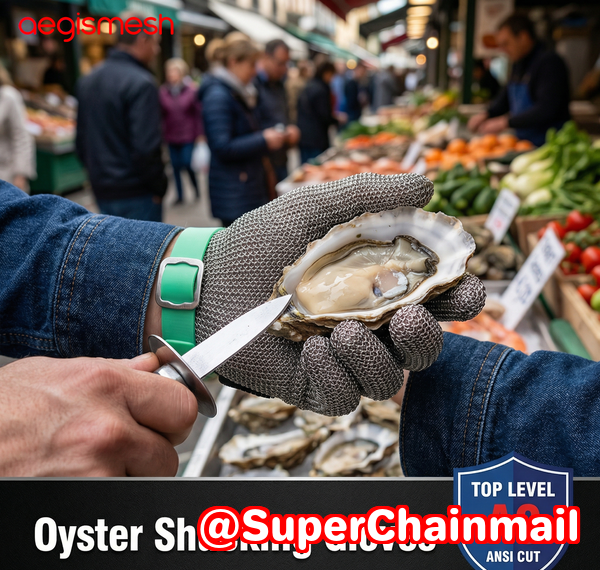
I once recommended chainmail gloves to a friend running a busy oyster bar. They initially bought a cheaper set online, thinking all stainless steel gloves were the same. Within weeks, several rings split while shucking oysters, causing minor cuts. We inspected their replacement gloves using Aegimesh’s guidance: every ring welded, correct 304 stainless steel, European 4-in-1 weave, and proper thickness. The difference was night and day. Cuts were gone, and the gloves lasted years with heavy daily use.
This experience reinforced that inspecting chainmail isn’t optionalit’s essential for safety.
Practical Tips for Buyers
Here’s a quick checklist I follow:
-
Ask about stainless steel grade. If the seller can’t answer, move on.
-
Inspect rings under light. Welds must be seamless.
-
Feel the weave. It should move fluidly without gaps.
-
Check for rust or sharp edges. Even new chainmail should be polished.
-
Perform a gentle pull test. Don’t risk buying gloves that fail immediately.
-
Match chainmail type to intended use. Don’t buy cosplay gloves for industrial cutting tasks.
Following these steps makes selecting chainmail simple, safe, and practical.
Conclusion
Chainmail is an investment in safety, durability, and quality craftsmanship. By focusing on material, welds, wire thickness, and weave patterns, buyers can confidently distinguish high-quality products from low-grade imitations. Personally, I highly recommend following these steps to ensure any chainmail purchase meets safety and durability standards.
For a detailed guide and reliable chainmail products, check out Aegimesh Chainmail: https://www.aegimesh.com/. With proper inspection and awareness, you can finally say goodbye to cuts and unsafe purchases.
FAQ
1. How can I tell if a chainmail ring is welded or open?
Look closely at the ring seam. A welded ring has a seamless finish with no visible gap. Open rings may look closed but can pull apart under pressure.
2. Which stainless steel grade is best for long-lasting chainmail?
304 stainless steel is sufficient for most kitchens and industrial use. 316 stainless steel offers higher corrosion resistance, ideal for saltwater or acidic environments.
3. How do I inspect the weave pattern for strength?
Check for consistent European 4-in-1 patterns. Flex the chainmailrings should move together without gaps or stretching.
4. What are the signs of low-quality or unsafe chainmail?
Open rings, thin wires, inconsistent weave, sharp edges, and early signs of rust or corrosion are all red flags.
5. Can decorative chainmail be used for protective purposes?
Not always. Decorative chainmail may lack welded rings, proper wire thickness, or the correct weave pattern, making it unsuitable for cut protection.
6. How do I choose the right chainmail for industrial vs cosplay use?
Industrial or kitchen chainmail should have thick, welded rings with 304/316 stainless steel and European 4-in-1 weave. Cosplay or decorative chainmail can use lighter materials but still benefits from good welds and weave.
7. Is there a quick way to test chainmail durability?
A gentle pull test helps: tug sections of the chainmail to ensure rings stay closed and the weave holds.
Tags / Keywords:
chainmail quality, welded rings, stainless steel chainmail, cut-resistant chainmail, chainmail inspection, European 4-in-1 weave, steel metal chainmail durability, kitchen safety gloves, industrial chainmail, cosplay chainmail