Protecting Your Hands with Cut-Resistant Stainless Steel Chainmail
When I first started looking for reliable protective gear for my workshop, I quickly realized that not all chainmail is created equal. I remember picking up a set that looked solid at first glance, only to discover a few weeks later that the rings were flimsy, poorly welded, and prone to opening under minimal pressure. For anyone who relies on chainmail for cut protectionwhether in industrial kitchens, meat processing, or even for cosplay and collectiblesthis is a common problem. Knowing how to spot high-quality chainmail can save you from injuries, frustration, and wasted money.
Cut-resistant stainless steel chainmail is more than just a stylish throwback to medieval armor; it’s a critical safety tool when handling sharp tools or performing tasks where accidental cuts are a real risk. But with so many options on the market, from decorative pieces to industrial-grade protection, how do you distinguish genuine quality? That’s where Aegimesh Chainmail comes in, offering clear guidance for buyers, collectors, and professionals alike.
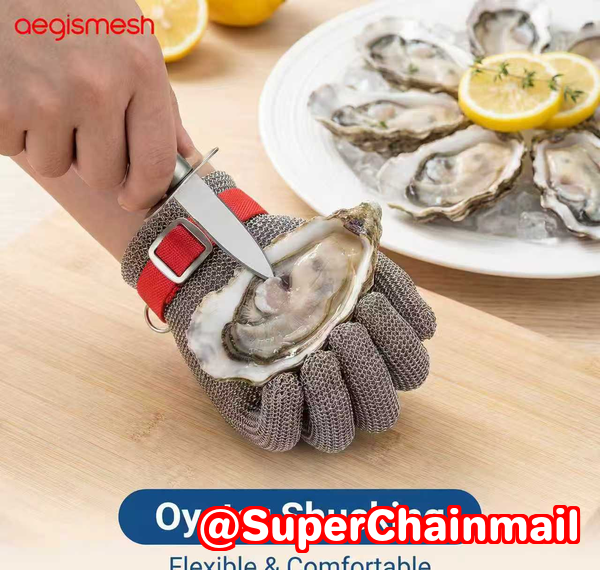
Common Challenges in Evaluating Chainmail Quality
Over the years, I’ve noticed three recurring pain points for people shopping for chainmail:
1. Difficulty distinguishing welded rings from open rings
Many chainmail sets use open rings that are simply twisted or cut, rather than fully welded. Open rings compromise safety because they can separate under pressure, rendering the chainmail useless as protective gear. Decorative pieces often use these for cost savings, but for industrial or food-handling purposes, welded rings are essential.
2. Uncertainty about stainless steel grades
Not all stainless steel is created equal. Lower-grade steel may corrode or weaken quickly, especially in wet or high-use environments. Buyers often struggle to differentiate between common 304 stainless steel and the more corrosion-resistant 316 stainless steel, which is recommended for high-durability applications like food processing or outdoor use.
3. Weak or inconsistent weave patterns
The weave pattern impacts both the flexibility and strength of chainmail. Poorly executed weaves can leave gaps or uneven stress points, causing rings to separate or the chainmail to deform over time. The European 4-in-1 weave, for instance, is a classic pattern known for balancing flexibility and resiliencebut only if executed correctly with uniform ring size and welding.
How to Inspect Chainmail for Quality
When I shop for chainmail today, I rely on a straightforward inspection approach. Here’s how I evaluate potential purchases step by step:
Check the material type
-
Ask the supplier about the stainless steel grade. For long-term use and resistance to corrosion, I look for 304 or 316 stainless steel.
-
Test corrosion resistance if possible, especially if the chainmail will come into contact with moisture or acidic substances.
Inspect ring welding and consistency
-
Welded rings should have a seamless join with no visible gap.
-
Run your finger along the weld; a smooth finish indicates precision, whereas rough or uneven joins can indicate poor craftsmanship.
-
Randomly pull a few rings apart gently to see if they holdthis simple pull test can quickly reveal weak links.
Evaluate wire thickness and inner diameter
-
Thicker wire generally provides better protection and longevity. I typically look for rings with a wire gauge that matches the intended use: thinner for decorative cosplay, thicker for industrial cut resistance.
-
Consistent inner diameter ensures the rings fit snugly without excessive gaps, which adds to both safety and visual appeal.
Examine weave patterns
-
The European 4-in-1 weave is a favorite for its balance of strength and flexibility.
-
Make sure the weave is tight and uniform, with each ring properly interlinked.
-
Avoid chainmail with uneven spacing or twisted rings, as these can compromise both appearance and protection.
Look for signs of poor craftsmanship or corrosion
-
Rust spots, discoloration, or pitted surfaces are red flags, especially for stainless steel chainmail.
-
Uneven finishing or sharp edges can indicate lower quality and potential safety risks.
Benefits of Proper Chainmail Inspection
Taking the time to carefully evaluate chainmail before purchase offers multiple advantages:
-
Avoid unsafe chainmail for industrial or food-processing use Welded rings and high-grade stainless steel are crucial to protect against cuts and prevent accidents.
-
Ensure decorative or cosplay chainmail meets expected durability Even for non-industrial use, poor-quality rings can bend or break, ruining your costume or collectible.
-
Save money by spotting low-quality products early It’s frustrating to pay for chainmail only to discover it falls apart in weeks. A thorough inspection ensures your investment lasts.
Practical Tips for Buyers
Over time, I’ve developed a few practical habits that make chainmail inspection much easier:
-
Perform a pull test on multiple rings to check for weak welds.
-
Inspect under bright light for subtle gaps or cracks in welded rings.
-
Check the weightheavier chainmail often indicates thicker wire and more robust construction.
-
Ask about the weaveunderstanding terms like European 4-in-1, Japanese 6-in-1, or other patterns helps match the product to your intended use.
-
Match the chainmail type to the taskindustrial cut-resistant gloves need different specifications than a cosplay tunic or decorative wall hanging.
Real-World Examples
A colleague of mine once bought a set of “stainless steel” chainmail for his food-processing job. It looked perfect in the photos, but once he started using it, he noticed several rings popped open while cutting meat. He had unknowingly purchased decorative-grade chainmail with open rings, which could have led to serious injury. After switching to high-quality Aegimesh Chainmail, with verified welded rings and 316 stainless steel, he noticed a huge difference in durability and peace of mind.
Similarly, cosplayers often underestimate how much wear and tear costumes experience during events. A tight European 4-in-1 weave made from high-grade stainless steel ensures the costume not only looks authentic but also survives weeks of handling and movement without falling apart.
Conclusion
Over the years, I’ve learned that identifying high-quality chainmail requires attention to detail and knowledge of materials, welds, wire thickness, and weave patterns. I highly recommend following these steps to ensure any chainmail purchase meets safety and durability standards. From industrial cut protection to cosplay or collectibles, inspecting these factors before buying can save you from accidents, wasted money, and frustration.
Learn more about identifying high-quality chainmail products: https://www.aegimesh.com/
Check out our detailed chainmail inspection guide today.
Frequently Asked Questions (FAQs)
1. How can I tell if a chainmail ring is welded or open?
Run your finger along the ring and look for any gaps. Welded rings have a seamless finish and cannot be pulled apart easily, whereas open rings can separate under pressure.
2. Which stainless steel grade is best for long-lasting chainmail?
304 and 316 stainless steel are most commonly recommended. 316 offers superior corrosion resistance, making it ideal for industrial or wet environments.
3. How do I inspect the weave pattern for strength?
Check for uniformity in ring alignment and spacing. European 4-in-1 is strong and flexible if woven correctly; uneven spacing or twisted rings are a sign of poor craftsmanship.
4. What are the signs of low-quality or unsafe chainmail?
Look for rust, discoloration, uneven or rough welds, thin or inconsistent wire, and gaps in the weave pattern. These indicate potential safety risks.
5. Can decorative chainmail be used for protective purposes?
Generally no. Decorative chainmail may use open rings or thinner wire and is not designed to withstand sharp objects. Always choose industrial-grade chainmail for protection.
6. How do I choose the right chainmail for industrial vs cosplay use?
Consider wire thickness, weld quality, stainless steel grade, and weave pattern. Industrial use requires stronger, welded rings and higher-grade steel, whereas cosplay may allow lighter or decorative options.
7. Are there simple tests to check chainmail durability?
Yes. A gentle pull test on a few rings, checking ring welds under bright light, and assessing the weight and flexibility are practical ways to evaluate quality before purchase.
Keywords / Tags:
chainmail quality, welded rings, stainless steel chainmail, cut-resistant chainmail, chainmail inspection, European 4-in-1 weave, steel metal chainmail durability, protective chainmail, industrial chainmail, cosplay chainmail