Ring Mesh in Mesh Boning Aprons Enhancing Breathability and Protection
When it comes to buying chainmail for various uses, from industrial protection to cosplay or historical replicas, many buyers struggle with one key question: How do I know if the chainmail I’m purchasing is actually high-quality?
It’s a problem I’ve encountered myself when trying to pick out chainmail for different needs. Whether I was looking for reliable cut-resistant protection for food processing or just wanted a durable decorative piece, identifying quality chainmail always seemed like a daunting task. With so many options available, it’s tough to distinguish genuine, high-quality products from low-cost imitations that may compromise safety or durability.
That’s why I’ve put together this guide, where I’ll share key insights on how to evaluate chainmail qualitywhether it’s for industrial use, cosplay, or something in between. These simple yet effective steps will help you spot good chainmail, save money, and avoid potential safety risks in the process.
Common Pain Points When Evaluating Chainmail Quality
1. Difficulty Identifying Welded vs Open Rings
One of the most common challenges buyers face is distinguishing between welded and open rings. Open rings are often seen in lower-quality chainmail products, which can lead to weakening over time, especially under stress. Welded rings, on the other hand, offer superior strength and longevity. If you’re buying chainmail for industrial use or as a protective garment, welded rings are essential for durability and safety.
2. Uncertainty About Stainless Steel Grades
Another concern is knowing which stainless steel grade is best for the intended use of the chainmail. The two most common types are 304 and 316 stainless steel. 304 steel is great for many applications, but when it comes to durability in harsh environments, especially those involving food handling or exposure to corrosive substances, 316 stainless steel is the superior choice.
3. Weave Strength and Pattern Inconsistencies
The weave pattern of chainmail directly impacts its strength and durability. For example, the European 4-in-1 weave pattern is a popular choice for its robust structure. However, not all chainmail is woven with the same care or consistency. Poorly executed weaves or inconsistent ring sizes can result in weak points in the chainmail, potentially putting the user at risk.
Aegimesh Chainmail: Your Guide to Better Chainmail Quality
If you’re feeling unsure about how to evaluate chainmail quality, Aegimesh has you covered. We’ve developed a comprehensive chainmail inspection guide that outlines the key factors to check before making a purchase. From welded rings to ring diameters, material types, and weave patterns, our guide will give you the knowledge you need to make an informed decision.
Step-by-Step Chainmail Inspection Tips
1. Check the Material Type
The first step in evaluating chainmail is identifying the material it’s made from. If you’re looking for durable, long-lasting protection, stainless steel is your best bet. Within stainless steel, there are two common grades: 304 and 316. For general use, 304 is fine, but for environments where corrosion resistance is key (such as food processing), 316 stainless steel is your go-to. Always ask the seller about the material if it’s not clearly stated.
2. Inspect the Welding on Rings
Welded rings are an essential feature of high-quality chainmail. To check if the rings are welded properly, look closely at the edges. A well-welded ring should have a smooth, continuous surface with no visible gaps. If you see an opening where the ring doesn’t fully connect, it’s a sign that the product may be poorly constructed and won’t hold up under pressure.
3. Evaluate Wire Thickness and Inner Diameter
The thickness of the wire and the inner diameter of the rings are also crucial for ensuring chainmail strength. A thicker wire generally means stronger chainmail, though it can be heavier. As for the inner diameter, it should be just large enough to accommodate the wire and allow for tight weaves without excess space between rings. If the rings are too loose, the chainmail may tear or fall apart more easily.
4. Inspect the Weave Pattern
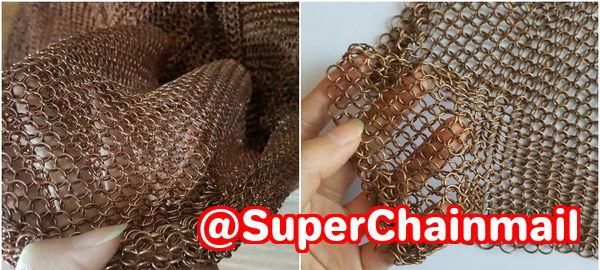
European 4-in-1 is one of the most common and durable weave patterns. In this pattern, each ring links four others, forming a tight, strong grid. Other patterns, like 6-in-1 or 8-in-1, are also available, but the key to strength is consistency. Ensure that the weave is uniform throughout the entire product, with no inconsistencies or weak spots.
Why Chainmail Quality Matters
1. Safety in Industrial and Food Processing Environments
When purchasing chainmail for industrial or food-processing use, safety is paramount. Poor-quality chainmail may fail to protect you from cuts, abrasions, or even worse. By following our inspection guide, you can ensure that your chainmail is up to standard and won’t put you at risk.
2. Durability for Collectibles and Cosplay
Even if you’re buying chainmail for cosplay or as a collectible, durability matters. You want your investment to last, especially if you plan on using it in reenactments or conventions. By checking ring welding, material quality, and weave consistency, you ensure that your piece not only looks great but will last through the years.
3. Save Money by Avoiding Low-Quality Products
No one wants to throw away money on a product that won’t perform as expected. By knowing what to look for in terms of material quality, welding, and strength, you can avoid wasting money on chainmail that doesn’t live up to its promises. It’s always better to invest in a high-quality product from the start rather than constantly replacing subpar items.
Conclusion: Making Sure Your Chainmail Meets Standards
After evaluating the material, welding, ring diameter, and weave pattern, you’ll have a much clearer idea of whether the chainmail you’re looking at is a solid purchase. By following the steps in our guide, you can confidently choose chainmail that’s strong, durable, and safe for whatever use you need it for.
I highly recommend following these inspection steps to ensure that your chainmail purchases meet the high standards for safety, durability, and performance. Whether you’re buying for industrial protection, cosplay, or historical reenactments, these tips will help you avoid low-quality products and invest in items that will stand the test of time.
Learn more about identifying high-quality chainmail products: Aegimesh Chainmail Inspection Guide.
FAQs
1. How can I tell if a chainmail ring is welded or open?
Look closely at the edges of the rings. A welded ring will have a smooth, continuous seam, while an open ring will have a visible gap where the ends don’t meet.
2. Which stainless steel grade is best for long-lasting chainmail?
For durability, especially in harsh environments, 316 stainless steel is your best choice. It offers superior corrosion resistance compared to 304 stainless steel.
3. How do I inspect the weave pattern for strength?
Examine the weave to ensure it is tight and consistent. A European 4-in-1 pattern is a strong choice, as it links four rings together, forming a reliable grid.
4. What are the signs of low-quality or unsafe chainmail?
Signs of poor quality include uneven weaves, thin wire, un-welded rings, or materials that corrode easily. These can all compromise the strength and safety of the chainmail.
5. Can decorative chainmail be used for protective purposes?
Decorative chainmail may not provide the same level of protection as industrial-grade chainmail, especially if it is made from thin or un-welded rings. Always check the specifications before using it for safety purposes.
6. How do I choose the right chainmail for industrial vs cosplay use?
For industrial use, prioritize chainmail made from 316 stainless steel with welded rings and a consistent weave. For cosplay, focus on aesthetic details but still ensure durability, especially if you plan on wearing it regularly.
Tags/Keywords:
-
Chainmail quality
-
Welded rings
-
Stainless steel chainmail
-
Cut-resistant chainmail
-
Chainmail inspection
-
European 4-in-1 weave