Steel Metal Chainmail Manufacturing Best Practices: How to Choose Quality Products for Safety and Durability
When it comes to purchasing chainmail for protection, cosplay, or industrial use, the process can feel like navigating a maze. You might find yourself asking questions like: Is this the right material for my needs? or How can I tell if this chainmail is truly durable or just a decorative piece? In fact, many buyers struggle to distinguish between high-quality chainmail and inferior products, which can lead to unexpected expenses or even safety risks.
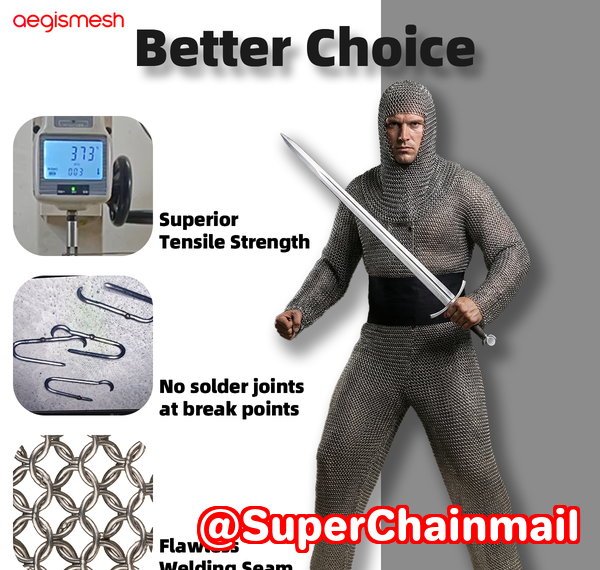
In this post, I’ll walk you through how to identify high-quality chainmail, share practical tips on inspecting materials, and explain why knowing these details can save you money and frustration. Whether you’re a buyer, collector, or professional in need of industrial cut-resistant protection, following these best practices will ensure you make an informed purchase every time.
Common Challenges When Evaluating Chainmail Quality
Before diving into how to assess chainmail, let’s talk about some of the most common pain points that come up during the buying process.
1. Identifying Welded Rings vs. Open Rings
One of the first hurdles many buyers face is distinguishing between welded and open rings. While open rings may look similar, they lack the strength of welded rings. Open rings can be prone to separating under stress, which is a serious concern if you’re using chainmail for protective or industrial purposes.
2. Confusion Over Stainless Steel Grades
Another challenge is understanding which stainless steel grade is best for the job. For instance, 304 stainless steel is commonly used, but it might not offer the same resistance to corrosion as 316 stainless steel. Without a basic understanding of these differences, you could end up with a chainmail product that doesn’t meet your durability or safety needs.
3. Weak Weave Patterns and Inconsistent Durability
Finally, evaluating weave patterns is essential for ensuring the strength and longevity of the chainmail. Weaves like the European 4-in-1 offer excellent protection, but many low-quality pieces use a loose or inconsistent weave that compromises both strength and durability.
Now that we’ve highlighted these common issues, let’s discuss how Aegimesh Chainmail can help you solve these challenges and make smarter, more reliable purchases.
How to Inspect Chainmail Quality
When evaluating chainmail, there are several key factors to consider. I’ll break down each one and explain how you can quickly assess the quality of a product.
1. Material Type: Stainless Steel 304 vs. 316
The material of your chainmail is crucial for durability and corrosion resistance, especially if you plan to use it in industrial or food-related environments.
-
304 Stainless Steel: This is a common and cost-effective material. It’s suitable for many applications but can corrode in harsh environments, especially in marine or acidic conditions.
-
316 Stainless Steel: This is a more expensive but superior choice, offering greater resistance to corrosion, particularly in industrial, food processing, or outdoor applications. If you’re looking for chainmail that will withstand the test of time in demanding environments, 316 is the way to go.
When inspecting chainmail, check for markings or ask the supplier which grade of steel has been used. If corrosion resistance is important to you, don’t settle for anything less than 316.
2. Inspecting Ring Welding and Wire Thickness
The strength of chainmail depends on how the rings are connected. High-quality chainmail uses welded rings instead of open ones. Welded rings are fused together, making the weave much stronger and more durable.
-
Welded Rings: These are permanently closed, offering superior strength and safety.
-
Open Rings: These can separate under stress, which is a significant risk when the chainmail is used for protection.
Additionally, you should inspect the wire thickness. Thicker wires provide more durability and resistance to breakage. If the wire feels too light or thin, it could indicate a lower-quality product.
To check this, give the chainmail a gentle tug. If the rings feel loose or you notice any give, it’s a red flag that the product might not hold up under pressure.
3. Evaluating Weave Patterns
The European 4-in-1 weave is one of the strongest and most commonly used patterns in chainmail. It’s designed to provide excellent protection by interlocking four rings with each new ring added.
However, not all weaves are created equal. Some chainmail products may use looser or less consistent patterns, which can reduce strength and increase wear. A high-quality chainmail should feel sturdy with no gaps between the rings. If you notice any irregularities in the weave, you might be dealing with a subpar product.
To test the weave, run your fingers over the surface. It should feel smooth and uniform, with no significant gaps between rings.
4. Checking the Ring Diameter
The inner diameter of the rings plays a critical role in the flexibility and strength of the chainmail. If the diameter is too small, the rings may become too stiff to move easily, making the chainmail uncomfortable or difficult to wear. If the diameter is too large, the chainmail may not provide adequate protection.
Make sure the diameter is consistent and appropriate for the intended use. For industrial use, look for smaller diameters to ensure tight, strong weaves. For cosplay or decorative purposes, slightly larger diameters may be acceptable.
The Benefits of Proper Inspection
Taking the time to inspect chainmail for quality has several key benefits:
-
Safety Assurance: For industrial or food processing uses, poor-quality chainmail could compromise safety standards. By inspecting materials, rings, and weave patterns, you can ensure your chainmail meets the necessary requirements.
-
Durability: High-quality chainmail can last for years, saving you from the frustration and cost of replacing cheap products. Whether it’s for cosplay, historical reenactments, or industrial applications, durability is key.
-
Cost Savings: A little extra time spent inspecting chainmail can help you avoid poor-quality products that won’t serve your needs. By identifying weak areas, you can save money in the long run.
Practical Tips for Inspecting Chainmail
-
Perform a Pull Test: Pull on the rings gently to check for strength. Welded rings should not separate, and the weave should feel tight and secure.
-
Check for Corrosion: Especially in marine or food-processing environments, look for any signs of rust or corrosion. Stainless steel should resist corrosion, but low-quality chainmail might not.
-
Inspect Craftsmanship: Check the uniformity of the weave. Irregularities or poorly finished edges are signs of poor craftsmanship.
-
Know the Right Type for the Job: Whether you need chainmail for industrial protection or for a costume, understanding the type of chainmail that fits your purpose will help you choose the right product.
Conclusion: How to Make an Informed Purchase
In conclusion, inspecting chainmail for quality is crucial to ensure that it meets both your safety and durability standards. I highly recommend following these steps to verify material type, weld strength, ring diameter, and weave patterns before making a purchase.
If you want to dive deeper into how to assess chainmail quality, I encourage you to check out Aegimesh’s chainmail inspection guide. Our guide will give you all the tools you need to make informed decisions and avoid costly mistakes.
FAQ: Common Questions About Chainmail
-
How can I tell if a chainmail ring is welded or open?
-
Look closely at the ring. Welded rings will be permanently closed, while open rings will show a visible gap.
-
-
Which stainless steel grade is best for long-lasting chainmail?
-
For most industrial and high-durability uses, 316 stainless steel is the best option. It offers superior resistance to corrosion.
-
-
How do I inspect the weave pattern for strength?
-
Examine the chainmail closely for evenness in the weave. The European 4-in-1 weave is considered one of the strongest and most reliable patterns.
-
-
What are the signs of low-quality or unsafe chainmail?
-
Look for loose rings, irregular weaves, thin wire, or visible gaps in the chainmail. These can indicate poor craftsmanship or lack of durability.
-
-
Can decorative chainmail be used for protective purposes?
-
While decorative chainmail might look great for cosplay, it may not provide the same level of protection as high-quality industrial chainmail.
-
-
How do I choose the right chainmail for industrial vs. cosplay use?
-
For industrial use, focus on materials like 316 stainless steel, welded rings, and tight weaves. For cosplay, decorative options with larger rings and lighter materials may suffice.
-
Tags/Keywords
-
Chainmail quality, welded rings, stainless steel chainmail, cut-resistant chainmail, chainmail inspection, European 4-in-1 weave, chainmail durability