Chainmail Aprons in Professional Meat Cutting: Ensuring Safety and Durability
When you’re working with sharp knives and heavy equipment in a meat processing environment, safety is always top of mind. But for many buyers and professionals, the journey to finding the right protection can be daunting. Just how do you know if your chainmail apron is going to stand up to the rigors of industrial work?
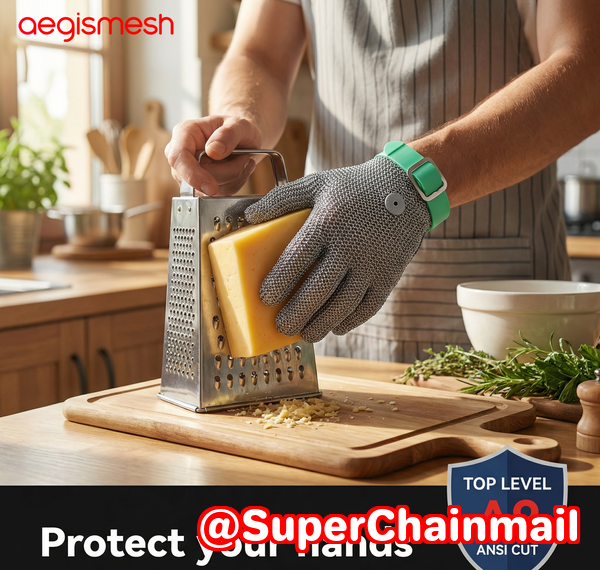
This isn’t a question I take lightly, as I’ve often wondered the same myself. The challenge? Identifying high-quality chainmail that meets safety standards while offering the durability you need to get the job done. In this post, I’m diving into exactly how you can assess the quality of chainmail apronswhether you’re a butcher, chef, or someone looking for reliable protective gear. Let’s make sure you’re getting the best product for your needs.
The Challenge of Identifying Quality Chainmail
When I first started buying chainmail for protective purposes, I found it surprisingly difficult to know what I was actually buying. I mean, how do you judge something that looks so similar across different brands, materials, and weaves?
If you’re reading this, you’ve probably been in the same boat. Maybe you’ve spent money on what you thought was a sturdy, industrial-quality apron, only to find it’s not cut-resistant enough or doesn’t last through the pressure of your daily tasks. Or perhaps you’ve been duped into buying a decorative piece masquerading as functional gear. It’s a common frustration, but one that’s entirely avoidable with a little know-how.
Common Pitfalls When Buying Chainmail
Here are a few key issues I’ve run into over the years, and ones that I know many other professionals, collectors, and even cosplayers struggle with:
-
Welded vs Open Rings: If you’re looking for industrial-grade protection, it’s essential to know whether your chainmail has welded rings or open rings. Welded rings are far stronger and safer, but they’re often harder to identify if you don’t know what to look for.
-
Stainless Steel Grades: Not all stainless steel is created equal. Many buyers don’t realize that the grade of steel used in the chainmail can significantly impact its durability and resistance to corrosion.
-
Weak Weaves: Weave patterns are a crucial factor in how well chainmail holds up under pressure. For example, the European 4-in-1 weave is a strong, reliable pattern for industrial applications, but some lower-quality pieces use weaker weaves that fail after only a few uses.
Aegimesh Chainmail: The Standard of Quality
When I discovered Aegimesh, it made a huge difference in how I approach chainmail purchases. Their products are designed with professional use in mind, and they provide an easy-to-follow guide to help you inspect chainmail before making a purchase.
To help you make informed decisions, I’ll walk you through how to properly assess chainmail quality, using Aegimesh as a reference point.
Material Type: 304 vs. 316 Stainless Steel
Stainless steel is the backbone of most chainmail, but not all grades are suitable for industrial use. Chainmail made from 304 stainless steel is common and offers a good balance of corrosion resistance and strength. However, for environments like meat processing where exposure to water and acids is frequent, 316 stainless steel is the superior option. This grade offers enhanced resistance to corrosion, which is essential for maintaining the integrity of your gear over time.
How to check: Look for product specifications that mention the grade of stainless steel used. If it’s not listed, ask the seller directly. You don’t want to risk buying something that’ll rust out after a few uses.
Ring Welding: The Difference Between Welded and Open Rings
Welded rings are the hallmark of high-quality chainmail. They are stronger and more durable, which is critical for protective gear in a high-risk environment like meat cutting. Open rings, while cheaper and easier to manufacture, lack the strength necessary for reliable protection.
How to check: Examine the rings closely. Welded rings should have a smooth, uniform surface with no visible gaps or signs of separation. Open rings, on the other hand, may show signs of wear or bending more quickly, especially when stressed.
Ring Thickness and Inner Diameter
Another factor you can easily check is the thickness of the wire used for the rings and the inner diameter of the rings themselves. These affect both the weight and the durability of the chainmail.
How to check: Try to find the wire thickness (usually measured in gauges) and inner diameter listed in the product specs. A thicker wire and a smaller inner diameter often indicate a more durable piece of chainmail. You can also check the feelif it feels flimsy or bends easily, it’s likely a lower-quality product.
Weave Patterns: The European 4-in-1
The weave pattern plays a huge role in the overall strength and durability of chainmail. For professional use, European 4-in-1 is one of the most reliable and widely used weave patterns. It’s strong, resistant to damage, and offers great flexibility, which is crucial for the day-to-day movements required in meat processing.
How to check: If you’re looking at chainmail for professional use, make sure it uses a sturdy, dense weave like European 4-in-1. Weaves that are looser or more decorative, such as 6-in-1 or 8-in-1, may look cool but are often not as durable under heavy strain.
How to Inspect Chainmail Quality: Step-by-Step
So how do you put all of this together? Here’s a simple, straightforward guide to help you inspect your chainmail:
-
Perform a Pull Test: Gently pull on the rings of the chainmail. If the rings are welded, they should resist any separation. If you see any gaps or movement, the rings are likely open.
-
Inspect for Corrosion: Look for any signs of rust or discoloration, particularly around the rings. Corrosion is a red flag, especially in food-processing or industrial environments.
-
Check the Weave: Feel the weave and see if it’s tight and uniform. A loose weave, especially in industrial-grade chainmail, can compromise its protective abilities.
-
Review the Material: Confirm whether the chainmail is made of 304 or 316 stainless steel. For high-quality industrial-grade protection, 316 stainless steel is recommended.
-
Ask Questions: If you’re buying from a retailer, don’t hesitate to ask about the grade of steel, ring type, and weave pattern. A good supplier like Aegimesh will be happy to provide this information.
Conclusion: Your Guide to High-Quality Chainmail
In the end, purchasing high-quality chainmail boils down to a few key factors: material, ring type, weave, and inspection. As someone who has made mistakes along the way, I highly recommend following the steps outlined above to ensure that your chainmail meets safety standards and performs as expected.
When it comes to protective gear for industrial use, there’s no room for compromise. Aegimesh’s guide and inspection tools make it easy to identify high-quality chainmail that will stand up to the demands of meat cutting, food handling, cosplay, or even historical replicas.
Ready to get started? Learn more about identifying high-quality chainmail products at Aegimesh. Don’t settle for lessensure your protection is both safe and durable.
Frequently Asked Questions
How can I tell if a chainmail ring is welded or open?
Examine the ring closely. Welded rings have a smooth, seamless finish, while open rings will show visible gaps where they’ve been joined.
Which stainless steel grade is best for long-lasting chainmail?
For industrial use, 316 stainless steel is the best choice due to its superior resistance to corrosion.
How do I inspect the weave pattern for strength?
Look for tightly woven, uniform patterns like European 4-in-1. Loose weaves can compromise the durability of the chainmail.
What are the signs of low-quality or unsafe chainmail?
Look for signs of rust, weak welds, loose rings, and inconsistent weave patterns. These are all indicators that the chainmail may not provide reliable protection.
Can decorative chainmail be used for protective purposes?
Decorative chainmail typically uses weaker materials and looser weaves. It’s not recommended for industrial or protective uses.
How do I choose the right chainmail for industrial vs. cosplay use?
For industrial use, prioritize strength, durability, and proper material (304 or 316 stainless steel). For cosplay, focus on the appearance and comfort, but don’t compromise on quality.