Lightweight Chainmail Aprons Without Compromising Safety
When purchasing chainmail for protection or display, it can often be overwhelming trying to tell which products are truly high-quality. The market is filled with various options, ranging from decorative items to functional pieces designed for industrial use. Whether you’re a professional needing cut-resistant gloves, a collector seeking historical accuracy, or a cosplayer looking for a durable costume accessory, ensuring that the chainmail you’re purchasing meets the highest standards is essential. In this post, I’ll share a practical, step-by-step guide to help you identify top-notch chainmail that offers both safety and durability.
The Challenge: Identifying Genuine Chainmail Quality
One of the biggest challenges many buyers face when evaluating chainmail is distinguishing between high-quality, functional pieces and low-quality, decorative ones. If you’re like me, you’ve probably wondered: How can I tell if my chainmail is truly built to last? How can I avoid wasting money on fragile pieces that can’t hold up to daily use?
As someone who’s been in the business of chainmail for years, I’ve seen firsthand how tricky it can be to separate the high-quality items from the imitations. But fear not, because with the right knowledge, inspecting chainmail quality doesn’t have to be a daunting task.
1. Understanding Chainmail Material and the Importance of Stainless Steel
The first thing you need to know when evaluating chainmail is the material it’s made from. Not all chainmail is created equal, and different materials serve different purposes. The best chainmail, particularly for industrial or protective uses, should be made from high-grade stainless steel.
304 vs. 316 Stainless Steel:
-
304 Stainless Steel: This is the most common type of stainless steel used in chainmail. It’s a versatile, corrosion-resistant metal, making it ideal for most general purposes. However, it’s less resistant to chlorides and certain chemicals, so it’s not the best choice for heavy-duty industrial environments or food processing.
-
316 Stainless Steel: If you’re looking for chainmail that can handle more extreme conditions, 316 stainless steel is the way to go. This material is more resistant to corrosion, making it the top choice for industrial applications, especially those involving exposure to salt or acids.
Pro Tip: When shopping for chainmail, ask the vendor what grade of stainless steel is used. For applications that require long-lasting durability and protection, 316 stainless steel is always your best bet.
2. Inspecting the Rings: Welded vs. Open
One of the easiest ways to tell if a chainmail piece is made with quality craftsmanship is by examining the rings. Rings are the backbone of any chainmail, and how they’re constructed can greatly affect the durability and safety of the product.
Welded Rings:
-
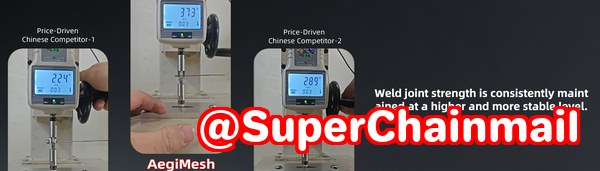
Welded rings are a sign of high-quality chainmail. These rings are permanently fused together, creating a strong, durable weave that won’t unravel easily. A chainmail apron or glove made with welded rings will be able to withstand significant force, making it ideal for heavy-duty tasks such as butchering, industrial work, or food processing.
-
To inspect welded rings, look for signs of a smooth, continuous joint. There shouldn’t be any visible gaps or cracks where the metal has been fused together.
Open Rings:
-
Open rings, on the other hand, are typically found in decorative or cheaper chainmail products. These rings are not welded shut, making them much weaker. Over time, open rings can become misaligned or break entirely, rendering the chainmail ineffective for safety purposes.
Pro Tip: If you’re buying chainmail for protection, always opt for welded rings. Open rings are suitable for light use or decoration but won’t offer the same level of durability.
3. Evaluating the Weave Pattern: European 4-in-1 for Strength
The pattern in which the rings are woven together is another key factor that determines the overall strength of the chainmail. The most common and strongest weave pattern used in high-quality chainmail is the European 4-in-1 weave. In this pattern, each ring passes through four other rings, creating a sturdy and tightly-woven structure.
A strong weave not only adds to the durability of the chainmail but also improves its cut-resistant properties. This is especially important for applications such as industrial work, where the chainmail needs to protect you from sharp objects.
Pro Tip: Check the weave pattern closely. If the chainmail has a loose or inconsistent weave, it’s likely a lower-quality product. High-quality European 4-in-1 weaves will have rings that fit snugly together with minimal gaps.
4. Assessing the Wire Thickness and Ring Diameter
Two other important factors to consider when evaluating chainmail are the wire thickness and ring diameter. These elements contribute to the overall strength and functionality of the chainmail.
Wire Thickness:
-
The wire thickness impacts the strength of the chainmail. Thicker wires make the chainmail more durable and capable of withstanding force. For industrial or protective use, look for chainmail that has a thicker gauge wire.
-
Thin wires are often used in decorative chainmail but will be more prone to wear and tear, especially in high-stress environments.
Ring Diameter:
-
The diameter of the rings also affects the overall strength. For example, smaller rings may create a denser, more protective weave, while larger rings may reduce flexibility and comfort.
-
For protective chainmail, ensure that the ring diameter is appropriate for the intended use. For example, chainmail used in the food industry may need to be smaller to provide more coverage and reduce the risk of cuts.
5. Performing the Pull Test: A Simple Yet Effective Method
One of the easiest ways to test the durability of a chainmail product is the pull test. This involves applying a gentle pull to the rings to ensure they don’t come apart or bend easily.
How to Perform a Pull Test:
-
Grab a section of the chainmail and apply a steady, firm pull.
-
If the rings hold their shape and the weave remains intact, you’re dealing with a high-quality product.
-
If the rings start to bend, separate, or break, you’ve found a low-quality chainmail product.
6. Signs of Low-Quality Chainmail
If you’re still unsure about the quality of your chainmail, here are some common signs of low-quality or unsafe products to watch out for:
-
Visible Gaps in Rings: This is a sign of poorly welded or open rings.
-
Loose Weave: If the rings move freely and the weave feels loose, the chainmail may not provide adequate protection.
-
Rust or Corrosion: Chainmail should be made from rust-resistant materials, so any sign of corrosion indicates poor craftsmanship or low-quality materials.
Conclusion: Invest in Quality for Safety and Durability
When it comes to chainmail, it’s worth investing the time to inspect the quality of your purchase. By following the tips in this guidechecking the material, inspecting the rings, evaluating the weave pattern, and performing a pull testyou can ensure that you’re getting a product that meets the highest standards of safety and durability.
I highly recommend following these steps to ensure any chainmail purchase meets safety and durability standards. Whether you’re purchasing for industrial, food handling, cosplay, or historical purposes, proper chainmail inspection is essential for making an informed decision.
Learn more about identifying high-quality chainmail products: Aegimesh Chainmail
FAQ
How can I tell if a chainmail ring is welded or open?
Welded rings will have a seamless, smooth joint, while open rings will have a small gap where the ends of the ring meet.
Which stainless steel grade is best for long-lasting chainmail?
For maximum durability, opt for 316 stainless steel, as it’s more resistant to corrosion and chemicals compared to 304 stainless steel.
How do I inspect the weave pattern for strength?
Look for the European 4-in-1 weave, where each ring passes through four others. The rings should fit tightly together without gaps.
What are the signs of low-quality or unsafe chainmail?
Signs include visible gaps in rings, loose or inconsistent weave, rust or corrosion, and weak rings that bend or break under pressure.
Can decorative chainmail be used for protective purposes?
Decorative chainmail often uses open rings and thinner wire, making it unsuitable for protective purposes. Only use chainmail made with welded rings and thicker wire for safety.
How do I choose the right chainmail for industrial vs cosplay use?
For industrial use, look for chainmail made with 316 stainless steel, welded rings, and a dense weave. For cosplay, lighter materials with decorative rings may suffice, but still ensure quality craftsmanship.
Keywords
-
chainmail quality
-
welded rings
-
stainless steel chainmail
-
cut-resistant chainmail
-
chainmail inspection
-
European 4-in-1 weave
-
chainmail durability