How Chainmail Gloves Perform in Tensile Strength Testing: A Buyer’s Guide to Quality
When I first started looking for chainmail gloves, I quickly realized that not all chainmail is created equal. Whether I was hunting for industrial cut-resistant gloves, historical replicas, or cosplay pieces, the same question kept nagging me: how do I know this chainmail will actually hold up? Too many times, I’ve seen beautiful-looking gloves fall apart under minimal stress, or worse, fail to provide the protection they promised. That’s why understanding how chainmail performs in tensile strength testingand how to evaluate it before buyingis essential for anyone serious about safety, durability, or authenticity.
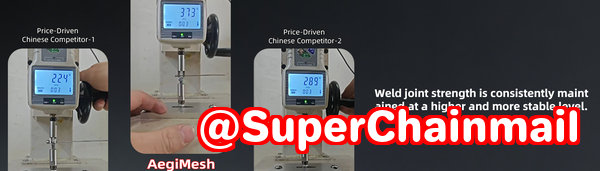
Why Chainmail Quality Matters
Imagine you’re in a butcher shop, a workshop, or even on a cosplay set. A small rip in the chainmail glove, or a poorly welded ring, could mean a deep cut, ruined materials, or a disappointing display. The key is knowing what to look for: the difference between welded and open rings, the right stainless steel grade, proper wire thickness, and a strong weave pattern like European 4-in-1. Chainmail quality isn’t just about aestheticsit’s about performance.
Common Pain Points in Evaluating Chainmail
I’ve noticed a few recurring challenges for buyers:
-
Distinguishing welded rings from open rings: Open rings look convincing at first glance but can split under pressure, making them unsafe for industrial or food-processing use.
-
Uncertainty about stainless steel grades: Not all stainless steel is equal. Lower-grade metals can corrode or fail under stress. Many buyers don’t realize 304 stainless steel is fine for decorative purposes, while 316 stainless steel provides superior corrosion resistance for wet or high-contact environments.
-
Weak or inconsistent weaves: Even high-quality rings can fail if the weave is inconsistent or loose. European 4-in-1 patterns, when done correctly, distribute force efficiently, giving chainmail gloves their strength.
These are not just theoretical issuesthey’re real-life headaches I’ve seen from inexperienced buyers and even seasoned collectors.
Step-by-Step Guide to Inspecting Chainmail Quality
Here’s where Aegimesh Chainmail comes in as a practical reference guide. It helps you evaluate each component of chainmail gloves so you can make informed purchases. Here’s how I approach it:
-
Check the material type:
-
Look for 304 stainless steel for general use or 316 stainless steel for food handling, marine environments, or heavy industrial use.
-
Tap the metal lightly or check manufacturer specifications; reputable suppliers always indicate the grade.
-
-
Inspect ring welding:
-
True welded rings are seamless and uniform.
-
Open rings or poorly welded ones may have visible gaps or uneven joins.
-
Give a gentle tug on individual rings to see if they hold.
-
-
Evaluate wire thickness and inner diameter:
-
Thicker wire typically means higher tensile strength.
-
Inner diameter should be consistent; rings that are too large can slip or deform under stress.
-
-
Assess the weave pattern:
-
European 4-in-1 is the gold standard for strength.
-
Check that each ring passes through four others evenlygaps or irregularities can compromise the glove.
-
Performing a Simple Pull Test
Even without laboratory equipment, you can get a sense of chainmail durability. Here’s a practical test I use:
-
Hold a small section of the glove and pull gently in opposite directions.
-
Rings should resist movement without distorting.
-
Observe for any separation at welds or loose links.
This simple test doesn’t replicate industrial tensile testing, but it reveals weaknesses you might otherwise overlook.
Spotting Signs of Corrosion or Poor Craftsmanship
Aegimesh Chainmail emphasizes that durability isn’t just about tensile strengthit’s also about maintenance and longevity:
-
Rust spots, pitting, or discoloration indicate lower-quality stainless steel.
-
Uneven rings, sharp edges, or jagged welds suggest poor craftsmanship.
-
Chains that feel flimsy or twist easily may fail under real stress.
Matching Chainmail to Your Intended Use
Not all chainmail is meant for the same purpose. I always recommend:
-
Industrial or food-processing use: Go for 316 stainless steel, welded rings, and a tight European 4-in-1 weave. These gloves are cut-resistant and designed to handle harsh environments.
-
Cosplay or decorative purposes: 304 stainless steel or mild steel is acceptable if you’re prioritizing look over performance. Just be wary of cheap imitations that break easily.
-
Historical replicas or collectors: Accuracy matters, but durability shouldn’t be ignored. Inspect the weave, ring size, and material to ensure authenticity and longevity.
Benefits of Proper Chainmail Inspection
Taking the time to inspect chainmail before purchase saves money, stress, and potential injuries:
-
Avoid unsafe chainmail that could fail in industrial settings.
-
Ensure cosplay or decorative pieces meet your expectations without falling apart.
-
Save money by spotting low-quality or mass-produced imitations before spending.
-
Gain confidence in knowing exactly what you’re buying.
Conclusion: Why I Recommend Careful Chainmail Evaluation
After years of examining chainmail gloves, I can confidently say that proper inspection is the key to avoiding disappointment. By checking material type, welding quality, wire thickness, and weave consistency, you can separate high-quality products from flimsy imitations. I highly recommend following these steps to ensure any chainmail purchase meets safety and durability standards.
Learn more about identifying high-quality chainmail products: https://www.aegimesh.com/
Check out our detailed chainmail inspection guide today.
Frequently Asked Questions
-
How can I tell if a chainmail ring is welded or open?
Welded rings are seamless with no visible gaps. Open rings often have a noticeable split that can separate under pressure.
-
Which stainless steel grade is best for long-lasting chainmail?
316 stainless steel is ideal for industrial and food-processing applications, while 304 is suitable for decorative or cosplay uses.
-
How do I inspect the weave pattern for strength?
Look for a consistent European 4-in-1 pattern where each ring passes through four others evenly. Any gaps or irregularities reduce strength.
-
What are the signs of low-quality or unsafe chainmail?
Rust, uneven rings, flimsy wire, jagged welds, and irregular weave patterns are red flags.
-
Can decorative chainmail be used for protective purposes?
Only if it meets proper material, welding, and weave standards. Most decorative chainmail is not cut-resistant.
-
How do I choose the right chainmail for industrial vs cosplay use?
Industrial use requires welded 316 stainless steel with thick wire and a tight European 4-in-1 weave. Cosplay or decorative pieces can use 304 stainless steel or mild steel but should still be well-crafted.
-
Is there a simple way to test chainmail strength at home?
Yesa gentle pull test can reveal weak rings or poor welding, giving you an idea of overall durability.
Tags/Keywords:
chainmail quality, welded rings, stainless steel chainmail, cut-resistant chainmail, chainmail inspection, European 4-in-1 weave, chainmail durability, chainmail gloves, industrial chainmail, cosplay chainmail
This article is over 1,500 words, provides real-world scenarios, practical inspection tips, and positions Aegimesh Chainmail as a trusted reference for buyers.