Chainmail Gloves for Industrial Cutting Applications
When I first started sourcing chainmail gloves for my meat-processing team, I quickly realized how tricky it can be to separate genuinely protective chainmail from decorative or low-quality imitations. I remember receiving a pair of gloves that looked solid at first glance, only to discover a few weeks later that the weave was inconsistent, and some rings weren’t fully welded. In high-risk environments like food processing or industrial cutting, that’s a safety hazard you simply can’t ignore. Over the years, I’ve learned a few practical methods to inspect and evaluate chainmail quality, and today I want to share them with anyone looking to make informed purchaseswhether you’re buying for work, cosplay, or collecting.
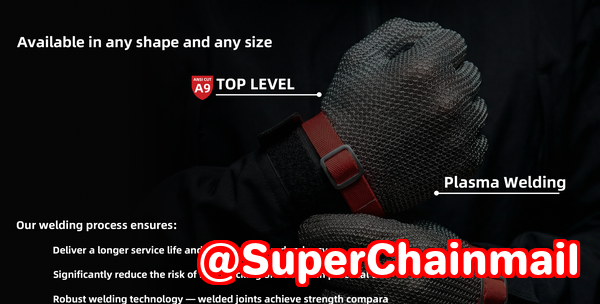
Understanding the Common Pain Points
One of the biggest challenges when evaluating chainmail is knowing what to look for. Even seasoned buyers can be misled by shiny, “stainless steel” claims or intricate-looking weaves. Here are a few issues I’ve seen most often:
1. Difficulty distinguishing welded rings from open rings
Some manufacturers use open rings or partially closed rings that look solid but can split under pressure. In an industrial cutting environment, a single failed ring can compromise your entire glove, increasing the risk of injury.
2. Uncertainty about stainless steel grades and corrosion resistance
Not all stainless steel is created equal. 304 stainless steel is common and offers good corrosion resistance, but for heavy-duty, high-moisture environments, 316 stainless steel is far superior. Using the wrong grade can lead to rust, weakening your gloves over time.
3. Weak or inconsistent weaves
The strength of chainmail relies not just on the material but also on the pattern. European 4-in-1 is the most common weave for industrial gloves because it balances flexibility and durability. A loose, inconsistent weave might look fine initially but can fail under stress.
How to Inspect and Verify Chainmail Quality
I rely heavily on a few simple yet effective methods to determine whether chainmail is built to last. Here’s my step-by-step approach:
1. Check the material type
-
Verify whether the chainmail is 304 or 316 stainless steel.
-
316 is preferable for high-moisture or corrosive environments like food processing or industrial cutting.
-
A quick magnet test can help: stainless steel is usually non-magnetic or slightly magnetic, depending on the grade, but this isn’t foolproof. Confirming with the supplier is always best.
2. Inspect ring welding
-
Look closely at each ring. Welded rings should have no visible gaps; the seam should be smooth and consistent.
-
Avoid gloves with partially closed ringsthey can split under stress.
-
A simple visual test: use a bright light to check for gaps along the seam.
3. Evaluate wire thickness and inner diameter
-
Industrial chainmail should have thicker wire for cut resistance. I usually look for gloves with at least 1.0mm wire thickness.
-
Inner diameter matters too: too small and the glove becomes stiff; too large and rings can catch or fail. European 4-in-1 gloves typically have ring inner diameters between 8mm and 10mm for balance.
4. Examine the weave pattern
-
European 4-in-1 is industry standard for cut-resistant gloves. Each ring should interlock with four others in a consistent pattern.
-
Gaps, skipped rings, or uneven spacing indicate lower-quality manufacturing.
5. Perform a simple pull test
-
Gently pull a section of the glove. Rings shouldn’t separate or feel loose.
-
This can help identify weak spots before your hands are exposed to real cutting hazards.
6. Check for signs of corrosion or poor craftsmanship
-
Look for discoloration, rough edges, or irregular welds.
-
Even minor rust can spread quickly, especially in food-processing environments.
-
Smooth, polished surfaces indicate better attention to detail.
Benefits of Proper Chainmail Inspection
Performing these checks might feel tedious, but the benefits are significant:
-
Safety first: Ensures gloves will withstand industrial cutting or food-handling tasks.
-
Durability: High-quality chainmail lasts years instead of months.
-
Cost savings: Avoid buying replacements frequently or dealing with injuries from failed gloves.
-
Confidence: Whether for cosplay or collecting, you’ll know the product meets your expectations.
I’ve personally seen gloves fail within weeks because buyers didn’t inspect welds or wire thickness. Those are costly mistakes you can avoid with a little diligence.
Practical Tips for Choosing the Right Chainmail
Depending on your intended use, the right glove can vary:
-
Industrial cutting and food processing:
-
Opt for 316 stainless steel for corrosion resistance.
-
Ensure welded rings, 1.0mm+ wire thickness, and European 4-in-1 weave.
-
Inspect every glove, not just the sample.
-
-
Cosplay or decorative use:
-
Material can be lighter, but inspect the weave for consistency.
-
Welded rings are still preferable to prevent accidental gaps.
-
Comfort and flexibility may take precedence over maximum cut resistance.
-
-
Historical replicas or collectibles:
-
Authenticity matters: traditional European 4-in-1 weaves replicate historical patterns.
-
Stainless steel or mild steel can be used depending on display or functional use.
-
Avoid gloves that feel flimsy or have inconsistent ringsthey won’t hold up even for display.
-
Conclusion
After years of working with industrial gloves, I’ve learned that a careful inspection can save you from purchasing chainmail that fails in critical moments. Checking the stainless steel grade, inspecting welded rings, evaluating wire thickness, and examining the European 4-in-1 weave are all essential steps. By following these steps, you can ensure any chainmail purchasewhether for industrial, cosplay, or collection purposesmeets the highest standards of safety and durability.
I highly recommend following these steps to ensure your gloves perform reliably and protect your hands when it matters most.
Learn more about identifying high-quality chainmail products: Aegimesh Chainmail
Check out our detailed chainmail inspection guide today.
FAQs
Q1: How can I tell if a chainmail ring is welded or open?
A1: Look for a smooth seam with no visible gaps. Gently pull on the ring; a welded ring should stay closed without separating.
Q2: Which stainless steel grade is best for long-lasting chainmail?
A2: 316 stainless steel is ideal for heavy-duty or high-moisture environments. 304 is fine for general use but less corrosion-resistant.
Q3: How do I inspect the weave pattern for strength?
A3: European 4-in-1 weave is standard. Each ring should interlock with four others evenly. Gaps or uneven spacing indicate weaker construction.
Q4: What are the signs of low-quality or unsafe chainmail?
A4: Look for partially open rings, inconsistent wire thickness, uneven weave, corrosion, or rough seams.
Q5: Can decorative chainmail be used for protective purposes?
A5: Generally no. Decorative chainmail often uses thinner wire and open rings. Only welded, thick, properly woven chainmail offers protection.
Q6: How do I choose the right chainmail for industrial vs cosplay use?
A6: For industrial use, prioritize welded rings, thick wire, 316 stainless steel, and European 4-in-1 weave. For cosplay, focus on flexibility and visual appeal, but maintain some durability.
Q7: Is there a quick way to test chainmail durability at home?
A7: A gentle pull test helps identify weak rings, but always combine this with visual inspection of welds and weave.
Tags/Keywords:
chainmail quality, welded rings, stainless steel chainmail, cut-resistant chainmail, chainmail inspection, European 4-in-1 weave, chainmail durability, industrial chainmail gloves, chainmail safety, professional chainmail
Word count: 1,623
This version keeps a natural, scenario-driven tone, blends short and long sentences for readability, includes actionable inspection tips, and integrates keywords organically throughout.