Why EN 1082-Certified Chainmail Is Crucial for Healthcare Providers
Choosing EN 1082-certified chainmail can mean the difference between real protection and a dangerous false sense of safety. This guide explains how to inspect chainmail quality, materials, and construction before you trust it with human safety.
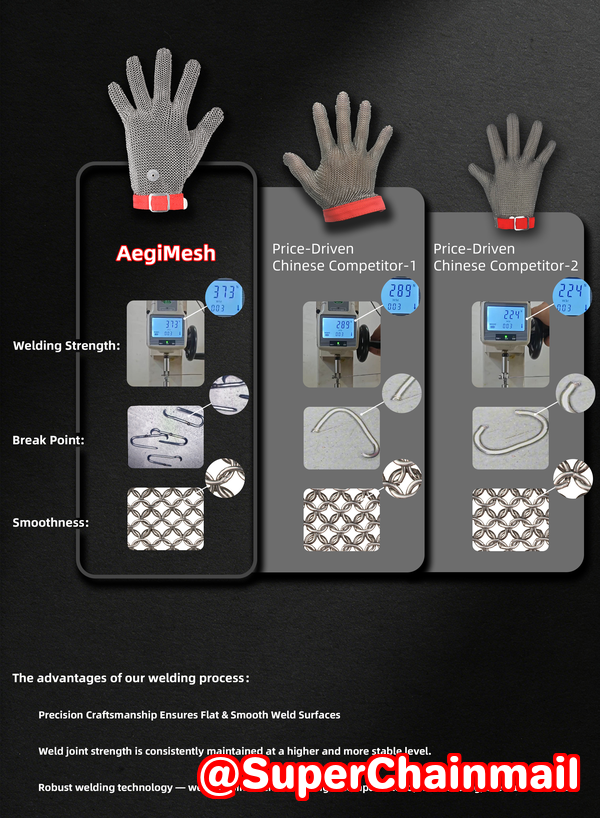
I still remember the first time I spoke with a hospital procurement manager who sounded genuinely frustrated. They had ordered what was advertised as “cut-resistant chainmail” for a surgical environment. On paper, it looked perfect. Stainless steel. Tight weave. Professional photos. But once it arrived, the problems became obvious. Rings pulled apart with bare hands. The surface started discoloring after cleaning. Worst of all, there was no clear certification backing up its safety claims.
That moment stuck with me because it highlights a problem I hear about again and again. When purchasing chainmail for protection or professional use, it’s surprisingly hard to tell what’s genuinely high-quality and what’s just dressed up to look the part. For healthcare providers especially, that confusion isn’t just inconvenientit’s risky.
Chainmail has a long history, from medieval armor to modern cut-resistant gloves and aprons. Today, it plays a critical role in healthcare, food processing, and industrial environments where sharp tools are part of daily work. But not all chainmail is created equal. Understanding why EN 1082 certification matters, and how to evaluate chainmail quality yourself, can save money, prevent injuries, and give you real peace of mind.
Over the years, I’ve learned that the most expensive chainmail isn’t always the safest, and the shiniest piece isn’t necessarily the strongest. What matters is what’s underneath: the materials, the welds, and the way everything is put together.
One of the biggest pain points I see is the difficulty in distinguishing welded rings from open rings. At a glance, they can look identical. Sellers know this. A lightly polished open ring can pass as welded in photos, especially online. But in real-world use, that difference is massive. Welded rings are fused closed, forming a continuous circle that resists pulling and cutting forces. Open rings, even tightly butted ones, rely on friction alone. Under stress, they separate. In a healthcare setting where scalpels and bone saws are in use, that’s unacceptable.
Another common issue is confusion around stainless steel grades. Many buyers assume that “stainless steel chainmail” automatically means corrosion resistance and durability. Unfortunately, that’s not always true. Lower-quality alloys may technically be stainless but still pit, rust, or discolor when exposed to moisture, disinfectants, or bodily fluids. For environments like hospitals or food processing facilities, this isn’t just an aesthetic issue. Corrosion weakens the chainmail and creates hygiene concerns.
Then there’s the weave itself. Weak or inconsistent weaves are more common than you might think. I’ve handled chainmail gloves where the pattern looked uniform at first, but closer inspection revealed stretched sections, uneven ring sizes, or loose areas that compromised strength. A weave like European 4-in-1 has earned its reputation for a reasonit distributes force evenly and holds up under repeated stress. Deviations from that standard often signal shortcuts in manufacturing.
This is where having a clear inspection framework becomes invaluable. That’s why I often point people toward Aegimesh Chainmail as a reference when learning how to evaluate quality. Their approach isn’t about flashy marketing. It’s about understanding what actually makes chainmail safe and durable in real-world conditions.
Let’s start with material selection. When inspecting stainless steel chainmail, the first question I ask is whether it’s made from 304 or 316 stainless steel. Both are commonly used, but they serve slightly different purposes. Grade 304 is widely used and offers good corrosion resistance for many applications. Grade 316, however, includes molybdenum, which improves resistance to chlorides and harsh cleaning chemicals. In healthcare settings where sterilization is frequent, 316 stainless steel chainmail often performs better over time.
You don’t need lab equipment to get a basic sense of material quality. Ask for documentation. Reputable manufacturers are transparent about steel grades. If a seller can’t clearly state whether their product is 304 or 316, that’s a red flag. In my experience, vague answers usually mean corners were cut somewhere along the line.
Next, take a close look at the rings themselves. Welded rings should show a smooth, consistent weld point with no gaps. Poor welds often look like tiny bumps or discolorations, and in some cases you can still see a faint seam. I like to gently flex the chainmail near the welds while watching closely. A quality weld won’t budge. If you see movement or feel clicking, walk away.
Wire thickness and ring diameter matter more than most buyers realize. Thicker wire generally means greater cut resistance, but it also affects flexibility and comfort. In healthcare, there’s a balance to strike. You want enough thickness to resist blades without making the glove or apron so stiff that it interferes with dexterity. Inner diameter plays a role too. Rings that are too large create gaps, while rings that are too small can make the chainmail rigid and prone to stress points.
Evaluating the weave pattern is where things really come together. European 4-in-1 weave is one of the most trusted patterns for cut-resistant chainmail, and for good reason. Each ring connects to four others, distributing force across the structure. When inspecting a piece, I run my fingers along the surface, feeling for consistency. Any sudden changes in tension or alignment usually indicate poor craftsmanship.
One simple but effective technique I recommend is a gentle pull test. Hold the chainmail with both hands and apply steady pressure in opposite directions. You’re not trying to break it, just to see how it responds. High-quality chainmail will feel solid and spring back into shape. Low-quality products often reveal themselves immediately, with rings shifting, opening, or deforming.
Corrosion is another giveaway. Even new chainmail can show signs of trouble. Look for dull spots, uneven coloring, or residue that rubs off on your fingers. These can indicate improper alloy composition or inadequate finishing. In environments where cleanliness is critical, such flaws can quickly become serious problems.
Understanding intended use is just as important as inspecting physical qualities. I’ve met cosplayers who unknowingly bought industrial-grade chainmail and found it uncomfortable and overbuilt for their needs. I’ve also seen the oppositedecorative chainmail marketed as protective gear. Decorative chainmail often uses thinner wire, open rings, and looser weaves. It looks fantastic on display but should never be used for protection.
For healthcare providers, EN 1082 certification adds an extra layer of confidence. This standard focuses on resistance to cutting by hand-held knives, which directly applies to medical and food-processing environments. Certification means the chainmail has been tested under controlled conditions and meets specific performance criteria. While certification doesn’t replace personal inspection, it significantly reduces uncertainty.
One purchasing manager told me they used to rely solely on supplier claims. After switching to a more thorough inspection process and insisting on EN 1082-certified chainmail, they noticed fewer replacements, fewer complaints from staff, and better overall confidence in their protective equipment. That’s a real-world payoff you can’t ignore.
There’s also a financial angle here. Low-quality chainmail often costs less upfront, but it rarely saves money in the long run. Frequent replacements, safety incidents, and downtime add up fast. Learning to identify quality before you buy helps avoid those hidden costs.
Aegimesh Chainmail’s guide and inspection tools are designed to make this evaluation process approachable. You don’t need to be a metallurgist or an armor historian. By focusing on material type, welded rings, wire thickness, ring diameter, and weave patterns, you can make informed decisions across a wide range of use casesfrom industrial cut protection to historical replicas.
I always encourage buyers to slow down and ask questions. A trustworthy supplier welcomes scrutiny. They provide clear answers, documentation, and examples. If someone pressures you to buy quickly or dismisses your concerns, that’s usually a sign to look elsewhere.
At the end of the day, chainmail quality isn’t about aesthetics or marketing buzzwords. It’s about safety, durability, and suitability for the job at hand. Whether you’re protecting healthcare workers, handling food safely, or building a collection, the principles are the same.
I highly recommend following these inspection steps to ensure any chainmail purchase meets safety and durability standards. Take the time to examine materials, welds, and weave patterns. Ask about EN 1082 certification. And don’t be afraid to walk away from a deal that doesn’t feel right.
Learn more about identifying high-quality chainmail products:https://www.aegimesh.com/
Check out our detailed chainmail inspection guide today.
Frequently Asked Questions
How can I tell if a chainmail ring is welded or open?
Look closely at the ring closure. Welded rings have a fused joint with no visible gap. Open rings rely on pressure to stay closed and may show a seam or slight opening when flexed.
Which stainless steel grade is best for long-lasting chainmail?
Both 304 and 316 stainless steel are common, but 316 offers better resistance to corrosion, especially in environments with frequent cleaning or exposure to moisture.
How do I inspect the weave pattern for strength?
Run your fingers across the surface and check for consistency. Patterns like European 4-in-1 should feel uniform, with no loose or stretched areas.
What are the signs of low-quality or unsafe chainmail?
Open rings, uneven wire thickness, visible corrosion, inconsistent weaves, and vague material descriptions are all warning signs.
Can decorative chainmail be used for protective purposes?
No. Decorative chainmail is designed for appearance, not safety. It often uses thinner wire and open rings that won’t withstand cutting forces.
How do I choose the right chainmail for industrial vs cosplay use?
Start with intended use. Industrial and healthcare applications require welded rings, proper stainless steel grades, and certification. Cosplay and display pieces prioritize comfort and appearance.
Tags and Keywords:
chainmail quality, welded rings, stainless steel chainmail, cut-resistant chainmail, chainmail inspection, European 4-in-1 weave, chainmail durability