EN 1082 and Its Role in Protecting Workers in the Food Industry
Meta description: Learn how EN 1082 helps identify high-quality chainmail, avoid unsafe products, and choose durable, cut-resistant protection for professional and everyday use.
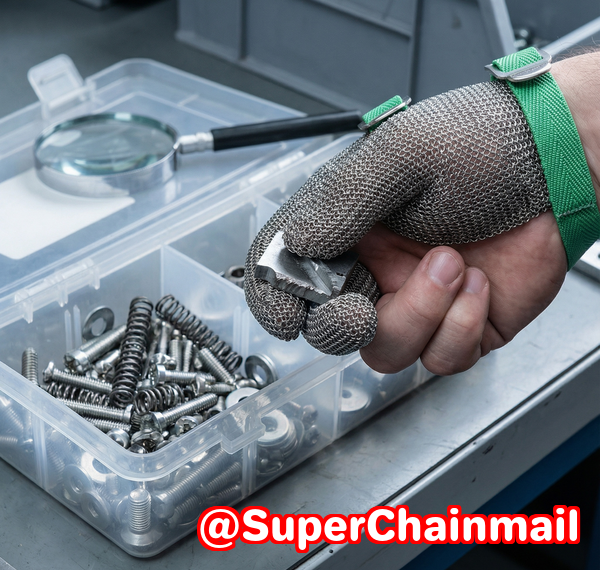
The first time I had to buy chainmail for a real job, not a costume or a display piece, I remember standing there thinking, How hard can this be? It’s just metal rings, right? I was wrong. What looked solid in photos turned out to be flimsy in my hands. Rings pulled apart. The surface felt rough. And suddenly, the idea of trusting this chainmail to protect someone working with knives all day felt irresponsible.
If you have ever tried to buy chainmail for food processing, industrial cut protection, or even a high-quality cosplay build, you probably know that feeling. The market is full of products that look similar but perform very differently. That’s where standards like EN 1082 and a proper understanding of chainmail quality really matter.
I want to walk you through what EN 1082 actually means, how it connects to real-world chainmail inspection, and how tools and guides like Aegimesh Chainmail can help you avoid low-quality or unsafe purchases. No heavy jargon. Just practical advice, learned the hard way.
In food processing environments, sharp blades are everywhere. Meat cutting, fish filleting, poultry processingthese are fast-paced jobs where one slip can cause a serious injury. EN 1082 exists for one simple reason: to reduce the risk of cuts and stabs when sharp tools are involved.
At its core, EN 1082 is a European standard that defines performance requirements for protective clothing made from chainmail. It doesn’t just ask, “Is this metal?” It asks tougher questions. Will it resist cuts under pressure? Will it hold together under repeated stress? Will it perform consistently, shift after shift?
This is why EN 1082 matters far beyond paperwork. It forces manufacturers and buyers to focus on construction quality, not just appearance. Welded rings. Consistent wire thickness. Reliable weave patterns. These are not optional details when someone’s hands are on the line.
Even if you are not buying chainmail specifically for a regulated food industry job, EN 1082 is still a powerful reference point. It gives everyday buyers a benchmark. If a product fails basic quality checks inspired by EN 1082 principles, that’s a red flag.
One of the biggest pain points I hear from buyers is how hard it is to tell welded rings from open rings. Online listings love close-up photos taken at flattering angles. In real life, the difference becomes obvious fast.
Open rings are exactly what they sound like. The wire is bent into a circle, but the ends are simply touching or overlapping. For decorative chainmail, this might be fine. For cut-resistant chainmail, it’s a dealbreaker. Under force, those rings can pry open like a paperclip.
Welded rings, on the other hand, are closed permanently. The joint is fused, usually by laser or resistance welding. When pressure is applied, the stress spreads across the entire ring instead of focusing on a weak gap.
A simple real-world test I use is what I call the two-finger pull test. Hold a small section of chainmail and gently pull in opposite directions. Don’t yank. Just apply steady pressure. High-quality welded rings will barely move. Low-quality or open-ring chainmail will start to deform or separate almost immediately.
This single check has saved me from more bad purchases than I can count.
Another major pain point is stainless steel confusion. Sellers love to say “stainless steel chainmail” without telling you which stainless steel. That’s like buying a car labeled “engine included.”
For most professional and long-term uses, you’ll see two grades come up again and again: 304 and 316 stainless steel.
304 stainless steel is widely used and offers good corrosion resistance for dry or controlled environments. It’s common in many chainmail gloves and aprons. When properly manufactured, it’s durable, hygienic, and suitable for many food handling tasks.
316 stainless steel takes it a step further. It includes molybdenum, which significantly improves resistance to corrosion, especially in wet, salty, or chemically harsh environments. If chainmail will be exposed to water, cleaning agents, or long hours of moisture, 316 is often the better choice.
When inspecting chainmail quality, I always ask:
-
Is the steel grade clearly stated?
-
Does the seller explain why that grade is used?
-
Does the finish look smooth and uniform, or dull and inconsistent?
Aegimesh Chainmail does a solid job of explaining these differences in plain language. Instead of vague marketing, their guide walks through how material choice directly affects durability and safety.
Weave pattern is another area where people get tripped up. Not all chainmail weaves are created equal, and some that look dense are surprisingly weak.
The European 4-in-1 weave is one of the most widely used patterns for protective chainmail. Each ring connects to four others, distributing force evenly across the mesh. This structure is strong, flexible, and proven over centuries, from historical armor to modern cut-resistant chainmail.
When inspecting a weave, I look for consistency above all else. Rings should sit flat. Spacing should be uniform. There should be no twisted sections or uneven gaps. Poor craftsmanship often hides here.
A quick visual trick: hold the chainmail up to the light. High-quality chainmail shows a regular, repeating pattern. Low-quality products often look chaotic once you know what to look for.
This matters whether you’re buying for industrial protection or a collectible piece. Weak weave patterns compromise durability, no matter the use case.
Wire thickness and ring diameter might sound technical, but you don’t need calipers to get a general sense of quality.
Thicker wire generally means better resistance to cutting and deformation. Rings that are too thin may look elegant, but they sacrifice strength. On the flip side, excessively thick wire can reduce flexibility, which matters for gloves and sleeves.
Ring diameter also plays a role. Very large rings create bigger gaps, which can allow blade tips to penetrate. Very small rings increase strength but add weight and cost.
The sweet spot depends on intended use. That’s why I appreciate inspection tools that explain why certain dimensions work better for certain jobs. Aegimesh Chainmail’s guide doesn’t push a one-size-fits-all solution. It shows how to match chainmail type to real-world needs.
One mistake I see often is people assuming decorative chainmail can double as protective gear. I’ve been guilty of this myself. A beautiful piece of chainmail jewelry or cosplay armor can feel solid, but it’s not designed for repeated impact or sharp-force resistance.
Signs of low-quality or unsafe chainmail include:
-
Visible gaps in rings
-
Uneven weld marks or no welds at all
-
Sharp burrs or rough edges
-
Inconsistent coloring, suggesting mixed metals
-
Excessive stretching under light pressure
If you’re buying for food processing or industrial cut protection, these are non-negotiable warning signs. Even for cosplay or replicas, they affect durability and comfort.
One of the biggest benefits of learning chainmail inspection is saving money. High-quality chainmail isn’t cheap, but neither is buying the same product twice.
I once watched a small food business replace three sets of gloves in under a year because they kept buying based on price alone. Once they invested in properly inspected, welded-ring stainless steel chainmail, replacements stopped being a routine expense.
That’s the real value here. Not just compliance or durability, but confidence. Confidence that what you’re buying will do its job.
If you’re new to this, here’s a simple step-by-step approach I recommend:
-
Start with purpose. Industrial cut protection, food handling, cosplay, or display? Be honest.
-
Check the material. Look for clearly stated 304 or 316 stainless steel.
-
Inspect the rings. Welded beats open, every time.
-
Evaluate the weave. European 4-in-1 is a strong, reliable standard.
-
Do a pull test. Gentle pressure tells you more than photos ever will.
-
Look for guidance. Tools like Aegimesh Chainmail exist to help buyers make informed choices, not guesses.
Following these steps turns a confusing purchase into a confident one.
In the end, EN 1082 isn’t just a standard on paper. It represents a mindset: safety first, quality always. Whether you’re protecting workers in a food facility or investing in a durable chainmail piece for personal use, the principles are the same.
I highly recommend following these inspection steps to ensure any chainmail purchase meets safety and durability standards. Learn more about identifying high-quality chainmail products at https://www.aegimesh.com/ and check out their detailed chainmail inspection guide today.
Frequently Asked Questions
How can I tell if a chainmail ring is welded or open?
Look closely at the joint. Welded rings show a smooth, sealed connection. Open rings usually have a visible gap or overlapping ends. A gentle pull test can confirm it quickly.
Which stainless steel grade is best for long-lasting chainmail?
For most uses, 304 stainless steel is reliable. For wet, salty, or chemically harsh environments, 316 stainless steel offers better corrosion resistance.
How do I inspect the weave pattern for strength?
Check for consistency. A strong weave like European 4-in-1 will look uniform, with evenly spaced rings and no twisting or gaps.
What are the signs of low-quality or unsafe chainmail?
Open rings, uneven welds, rough edges, inconsistent metal color, and excessive stretching under light pressure are all warning signs.
Can decorative chainmail be used for protective purposes?
Generally, no. Decorative chainmail is not designed for cut resistance and should not be used where safety is a concern.
How do I choose the right chainmail for industrial vs cosplay use?
Start with purpose. Industrial use requires welded rings, proper stainless steel, and tested durability. Cosplay can prioritize appearance, but quality still affects comfort and lifespan.
Tags / Keywords:
chainmail quality, welded rings, stainless steel chainmail, cut-resistant chainmail, chainmail inspection, European 4-in-1 weave, chainmail durability, EN 1082, food industry protection